
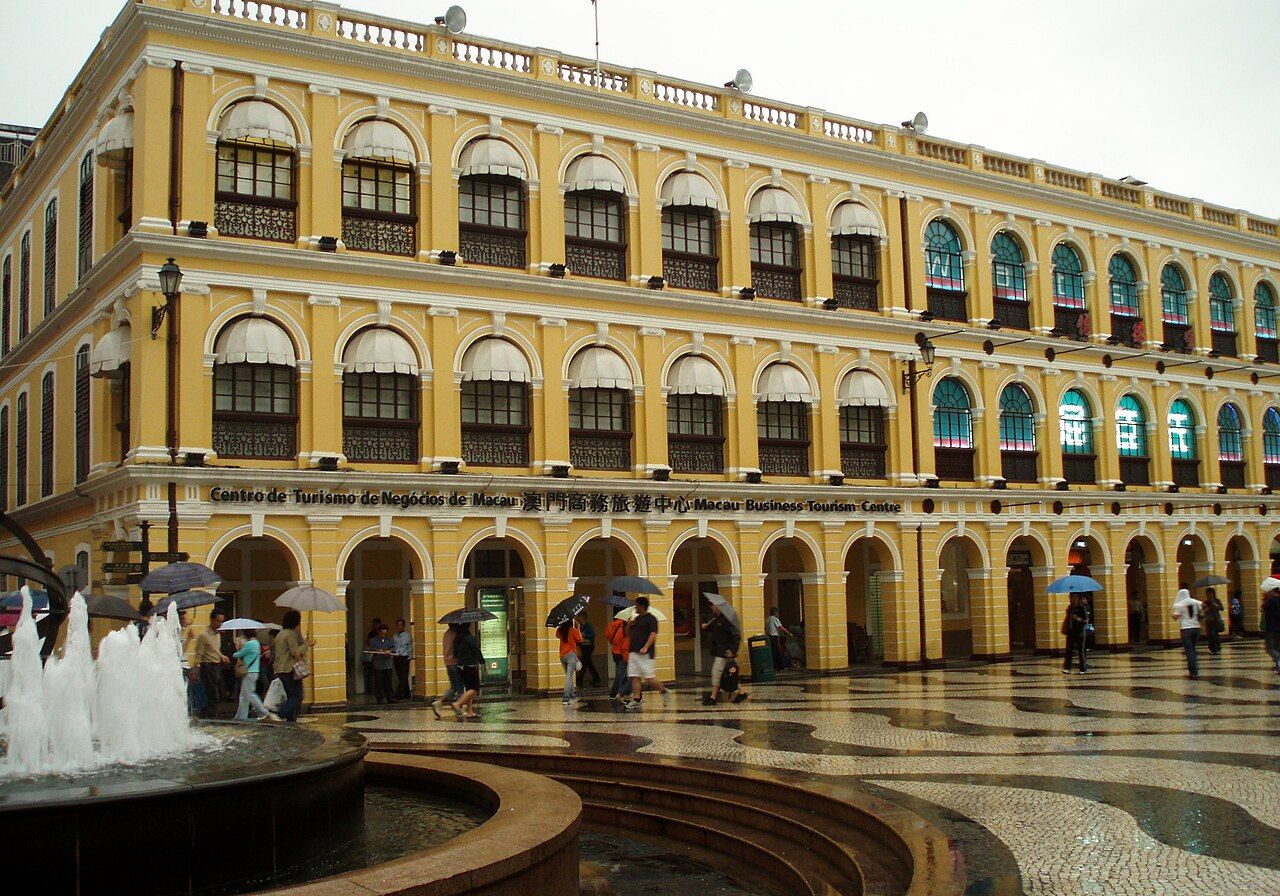
Macau is known to most visitors for its casinos, but the city has a much older story. For more than four centuries it was a meeting point of Portuguese and Chinese life, and the historic centre still shows it: Baroque church fronts beside incense-filled temples, Portuguese street names above Cantonese shop signs, and squares paved in black-and-white stone waves. The old centre is listed as a World Heritage site, and nearly all of it can be covered on foot in a day. This stop on the line is a walking route through it, plus an afternoon on Taipa.
Getting there
From Hong Kong, fast ferries cross to Macau in about an hour from terminals on Hong Kong Island and in Kowloon. The other route is by bus across the long bridge that links Hong Kong, Zhuhai and Macau, starting from a border crossing near Hong Kong's airport. Both are straightforward. Macau has its own immigration controls, separate from Hong Kong and from mainland China, so carry your passport and check entry rules for your nationality before you go.
The local currency is the pataca. Hong Kong dollars are widely accepted, though you often receive change in patacas. Buses and taxis connect the ferry terminals with the old centre, and from there everything in this guide is walking distance. The streets are steep in places and the pavements can be slippery after rain, so wear shoes with some grip and carry water in the warmer months.
Senado Square and the old streets
Start in Senado Square, the long, sloping square at the heart of the old city. The pavement is the first thing you notice: small black and white stones laid in rolling wave patterns, a Portuguese tradition carried across the world. Pastel colonial buildings with arched arcades line both sides. At one end stands the Leal Senado building, the old seat of the city's municipal government, with a courtyard and garden behind it.
From the top of the square, lanes climb past St Dominic's Church, with its cream and green facade, and the Cathedral a short walk away. The lanes that run between them are crowded with shops selling almond cookies and dried meat, and the smell of baking follows you uphill. Go early in the day if you can; by late morning the main route is packed.
The Ruins of St Paul's
At the top of a broad stone stairway stands Macau's most famous image: the carved stone facade of the Church of Mater Dei, known as St Paul's, built in the early seventeenth century. A fire in 1835 destroyed the rest of the church, leaving only the front wall standing. Look closely at the carving and you find a blend of Christian images with Chinese characters and Asian motifs, a record in stone of the people who built it. Behind the facade, a small crypt and museum hold religious art.
Next door, Monte Fort sits on a hill above the ruins, with old cannon on its walls and wide views over the city. The museum inside tells the story of Macau's trade, families and festivals.  Change here for Hong Kong and MacauA week in Hong Kong Afterwards, walk down through the quieter lanes towards the inner harbour, where the old trading streets meet the water.
Temples and the Chinese city
The Chinese side of Macau is just as old. A-Ma Temple, near the southern tip of the peninsula, honours the goddess of seafarers and is older than the Portuguese settlement itself. Its halls climb a rocky hillside, with coils of incense hanging from the roofs and stone carved with inscriptions. Smaller temples sit in back streets throughout the old city, often open to anyone who steps quietly through the door.
The Guia Fortress, on the highest hill of the peninsula, has a lighthouse and a small chapel with wall paintings. Walking up the paths around it gives a sense of how small and steep Macau really is, and how much of the modern city stands on land reclaimed from the sea.
Taipa village
Across the bridges, Taipa was once a separate island, now joined to Coloane by reclaimed land. Its old village is a cluster of low houses and narrow lanes around a small church, with a central street lined with snack shops and bakeries. Further along, a row of green-and-white colonial houses beside the old waterfront has been preserved as a museum of Macanese domestic life.
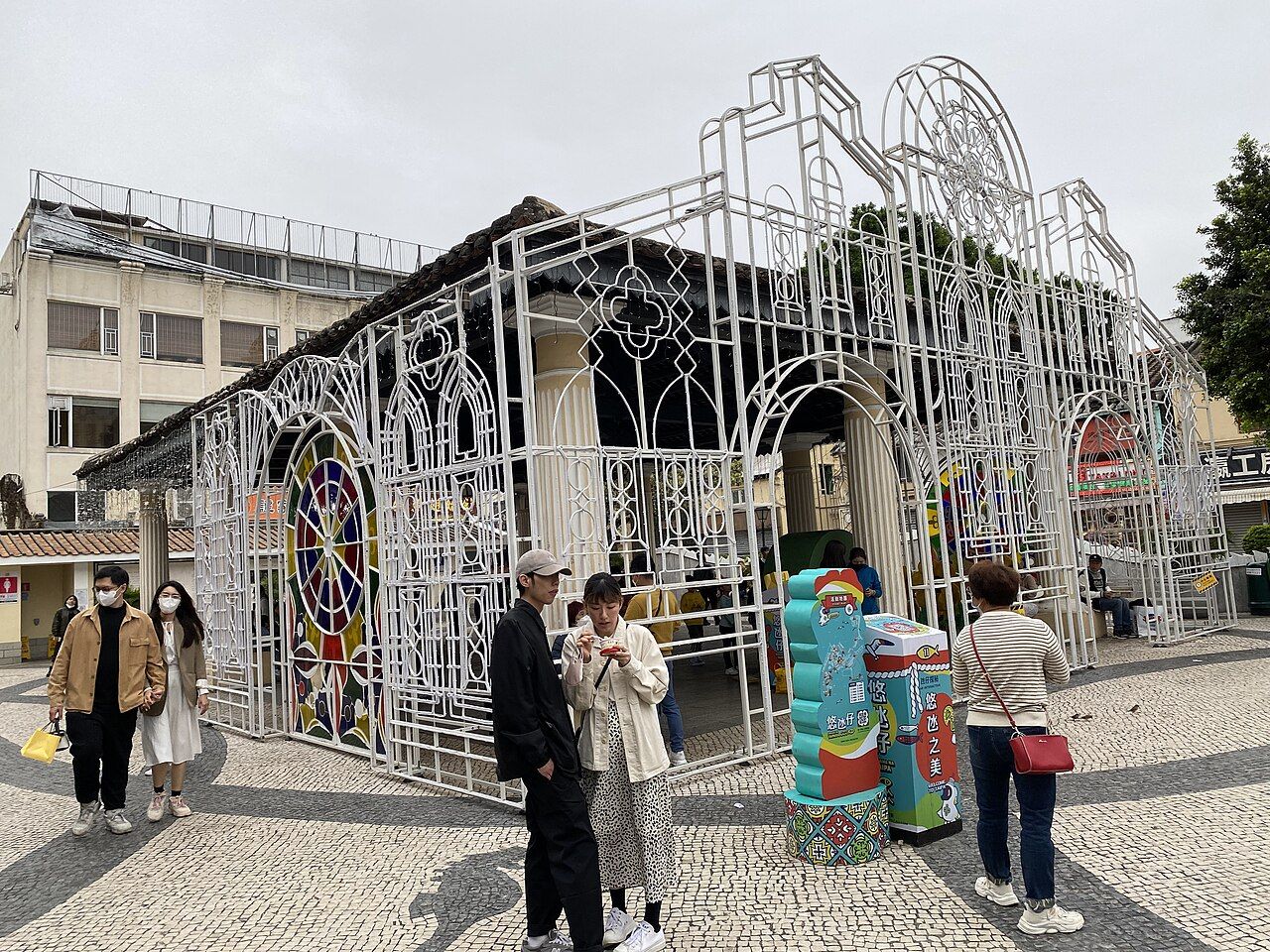
Taipa is the place to try the food that blends both traditions. Macanese cooking mixes Portuguese recipes with spices from Africa, India and Southeast Asia and Chinese technique. Look for minced meat with potato and rice, braised dishes with curry and coconut, and the small egg tarts that have become a symbol of the city. Coloane, further south, adds a quiet village, beaches and a small chapel if you have time to spare.
Making a day of it
A single day covers the essentials: an early start in Senado Square, the climb to St Paul's and Monte Fort, lunch in the old city, A-Ma Temple in the afternoon, and Taipa as the light fades. If you can stay longer, the green paths on Coloane and the museums in the old centre reward a slower pace. Summer is hot and humid, and typhoons can stop ferries, so check the weather before you set out.
Macau pairs naturally with a week in Hong Kong or with a slower trip on into southern China. For the habits of a shared table in the region, the guide to chopsticks and table manners is a useful companion.
Photographs on this platform
- Main photograph: Georgio, CC BY-SA 3.0
- Photograph: LN9267, CC BY-SA 4.0