
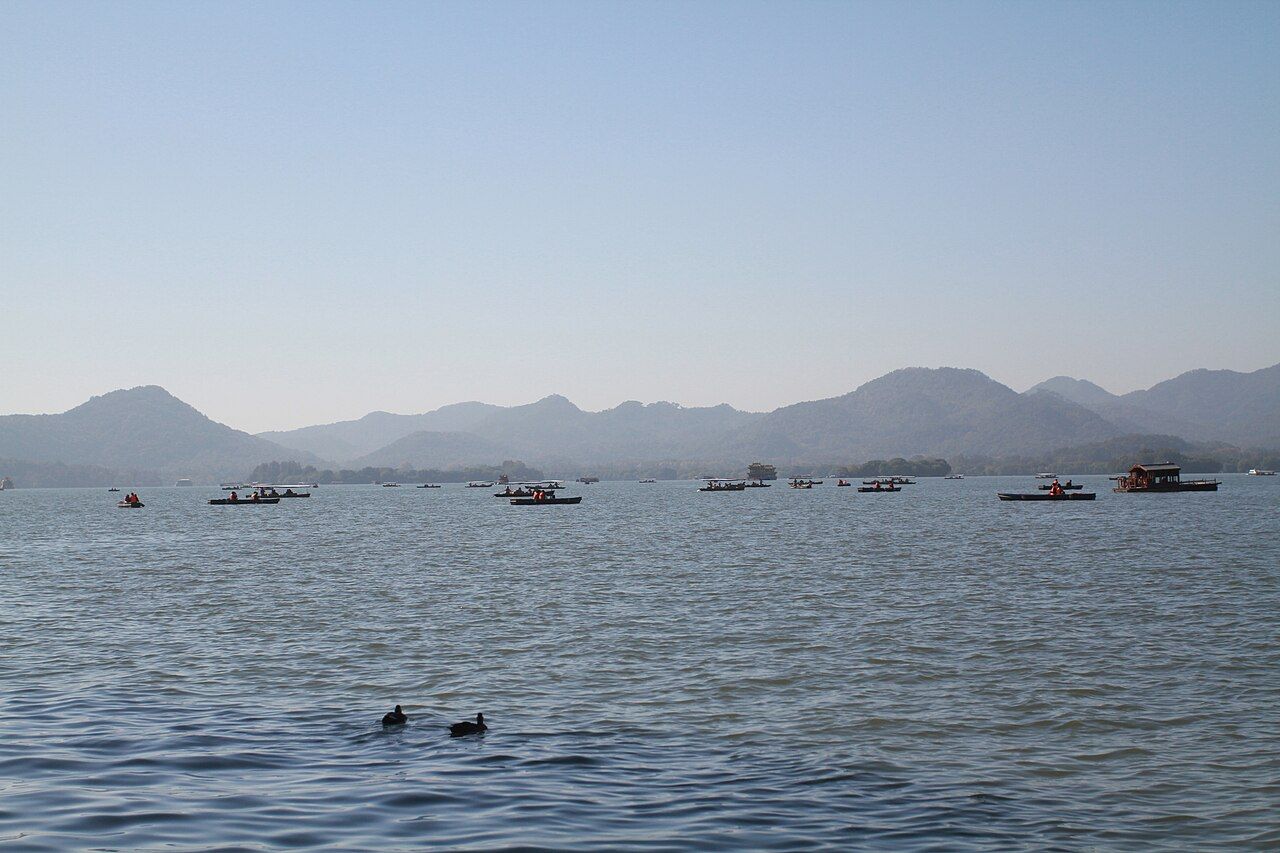
Hangzhou is a large, modern city, but its centre faces one of China's most celebrated landscapes. West Lake, ringed by low wooded hills, has been shaped over centuries by causeways, islands, temples and gardens, and it is a UNESCO World Heritage Site. Behind the lake, the hills are covered in tea terraces that produce Longjing, one of China's best-known green teas. Hangzhou is easy to reach from Shanghai and rewards a day or, better, two.
Getting there
High-speed trains run frequently between Shanghai and Hangzhou, taking around an hour. Most arrive at Hangzhou East Station, which is linked to the lake by metro. Train tickets in China are real-name and tied to your passport. Our guide to Shanghai's Bund and its lanes covers the city you are most likely coming from.
Once there, the metro, buses and public bicycles reach the lake and the hills. Weekends and public holidays bring very large crowds; a weekday visit is far calmer.
The lake's shoreline is about fifteen kilometres around, and walking all of it takes most of a day. Most visitors combine walking with short bus rides, boats or bicycles. The northern and eastern shores, close to the city centre, are the busiest; the western side, with its quieter gardens and wetlands, sees fewer people.
The causeways
Two long causeways cross West Lake, each named after a poet who served as an official in Hangzhou. The Su Causeway, named after Su Dongpo, runs nearly three kilometres north to south across the western side of the lake, with six arched stone bridges and willows and peach trees along its length. The shorter Bai Causeway, named after Bai Juyi, links the northern shore to Gushan Island and passes the Broken Bridge, famous from a Chinese legend.
Walk the Su Causeway early in the morning, when mist often hangs over the water and the paths belong to walkers and people doing tai chi. Later in the day, it is busy, but still a pleasant walk. Small boats carry visitors to the islands in the lake, including the one with the Three Pools Mirroring the Moon, three small stone towers that stand in the water.
In the evening, the lakeside promenade near the city centre fills with families and couples walking off dinner, and the hills turn dark against the sky. Music fountain shows and lights draw crowds on the eastern shore; the western side stays dim and quiet, with only the sound of water against the stone.
The pagodas
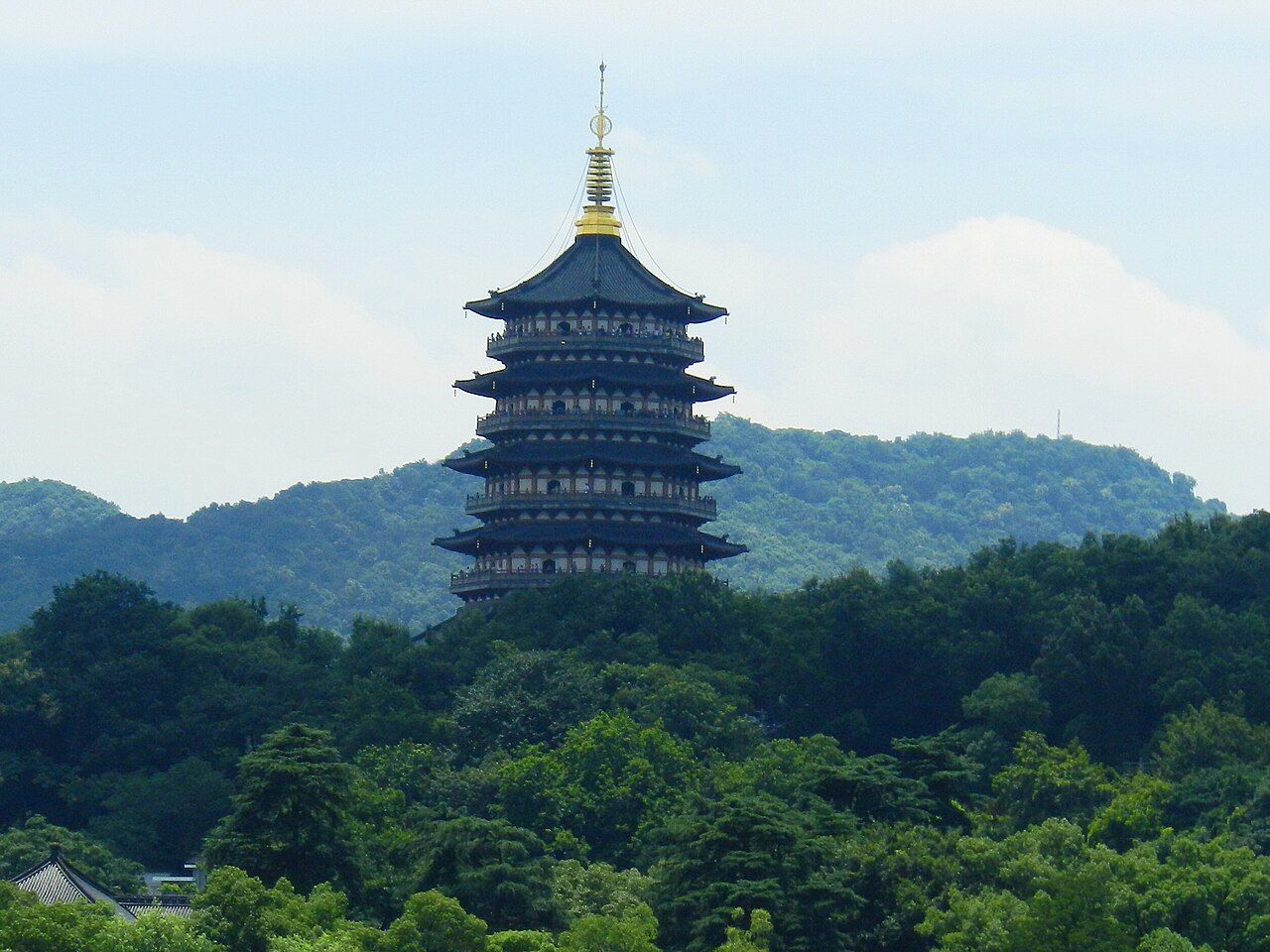
Leifeng Pagoda stands on a hill on the south shore of the lake. The original pagoda collapsed in the early twentieth century, and the present tower, completed in 2002, was built over its ruins, which you can see beneath it. The tower is linked to the legend of the White Snake, one of China's best-known folk tales.
 Change here for ChinaXi'an: the city wall and the Terracotta Army
On the northern side of the lake, the slender Baochu Pagoda rises from a hill above the water. A short climb leads to rocky paths with views across the lake to the city. Seen together, the two pagodas mark the lake's north and south and give you a way to orient yourself.
Climbing Leifeng Pagoda is possible by stairs and lifts, and the upper galleries give one of the best views over the whole lake, with the causeways laid out below like lines drawn on water.
Lingyin Temple
Lingyin Temple, in the hills west of the lake, is one of the largest and oldest Buddhist temples in China, founded in the fourth century. Its halls have been rebuilt many times, and today they hold large gilded statues, including a great seated Buddha in the main hall. It remains an active temple, and on festival days it is crowded with worshippers.
The approach to the temple passes Feilai Feng, the Peak Flown From Afar, a limestone hill whose cliffs and caves hold hundreds of Buddhist rock carvings made over several centuries. The scenic area and the temple usually require separate tickets, and arrangements change, so check before you go. Allow at least half a day for both.
Dress modestly, and expect incense, chanting and crowds of local worshippers rather than a museum hush. Several smaller temples lie in the forest above Lingyin, reached by paths that climb into the hills, and they are often almost empty.
The Longjing tea hills
Longjing, or Dragon Well, tea is grown on the slopes south-west of the lake. Villages such as Longjing and Meijiawu sit among the terraces, and walking paths connect them through the tea bushes. The most prized tea is picked in early spring, before the Qingming festival in early April, when the hills are bright green and you may see pickers at work.
Walk up into the hills from the lake, or take a bus to one of the villages and walk back down. Many households sell tea from their homes, and buying some is a pleasant way to support local growers. Prices vary widely; taste before you buy, and agree on the price clearly before anything is weighed out.
When to go
Spring is the favourite season, with blossom along the causeways and fresh tea in the hills. In summer, the lake's lotus flowers bloom, but the heat and humidity are intense, with frequent storms. Autumn is clear and comfortable, and osmanthus trees scent the air in September and October. Winter is cold and grey, but quiet, and snow on the Broken Bridge is a celebrated sight.
Visa rules for China change, so check before you go. For a different kind of hill country by rail, our guide to the Li River and Yangshuo covers China's karst landscapes further south.