
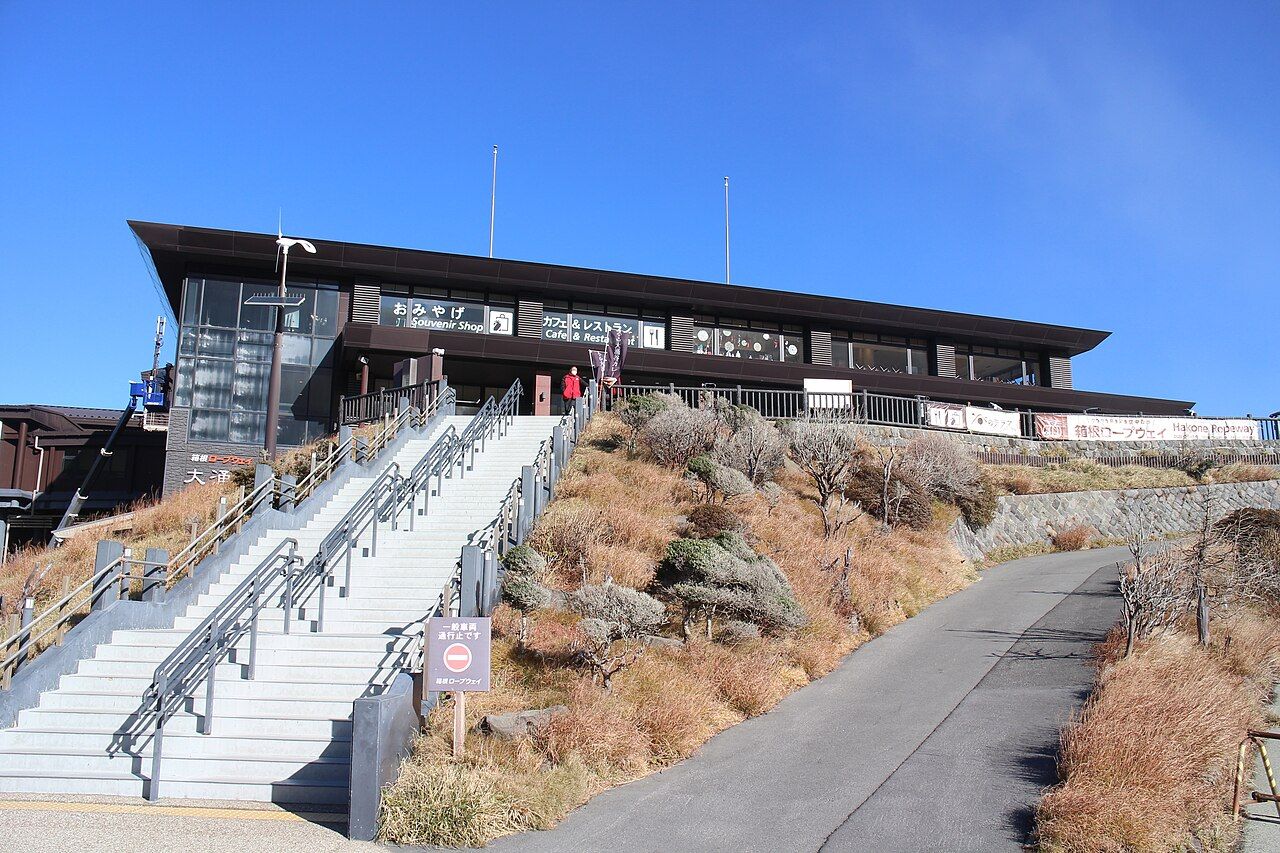
Hakone is a mountainous hot-spring area inside a national park, a little under two hours from central Tokyo. Its old volcanic caldera holds a lake, steaming vents and dozens of spa towns. The classic way to see it is a loop: a mountain railway up, a cable car and ropeway over the hills, a boat across Lake Ashi, and a bus back down. You can do it in a long day, but a night in the hills makes it far more relaxed.
Getting to Hakone
Trains run from Shinjuku in Tokyo to Hakone-Yumoto, the gateway town at the bottom of the hills, including limited express services with reserved seats. The shinkansen also stops at Odawara, where you can change onto local trains for the short climb to Hakone-Yumoto. Regional passes cover the loop's trains, cable car, ropeway, boats and buses for a set number of days; their prices and coverage change, so check before you go.
Leave large luggage behind. The loop involves many changes, and space on the small trains and ropeway is tight. Luggage-forwarding services exist between Hakone-Yumoto and many inns, and some travellers send cases on to their next city.
The loop can be ridden in either direction. Going up by railway and down by bus is the classic order, but on busy weekends the ropeway queues at Sōunzan can be long by late morning. Starting early, or riding the loop in reverse from Moto-Hakone, can save time. Weekdays outside the holiday seasons are noticeably calmer.
The mountain railway and the cable car
The Hakone Tozan Railway climbs from Hakone-Yumoto to Gōra, one of the steepest adhesion railways in Japan. To gain height on the tight slopes it uses switchbacks: the train stops, the driver walks to the other end, and it reverses up the next section. In June and early July, hydrangeas bloom along the line and the trains run slowly past them in the evening.
At Gōra, change to the short funicular cable car that climbs to Sōunzan. Hakone Open-Air Museum, a sculpture park with works set out across the hillside, is near the railway and makes a good stop if you have the time.
Ōwakudani by ropeway
From Sōunzan, the Hakone Ropeway carries you over the ridge and down to Ōwakudani, a volcanic valley formed by an eruption thousands of years ago. The cabins pass directly over slopes of yellow sulphur and rising steam, and on a clear day Mount Fuji appears beyond them. The smell of sulphur is strong.
At Ōwakudani station, eggs boiled in the hot springs turn black in their shells and are sold in small bags; local tradition says each one adds years to your life. Volcanic activity sometimes raises the alert level here, and when it does, the ropeway and the valley can close. Check before you go, and follow any signs about where you can walk. People with asthma or heart conditions are advised to take care in the gas.
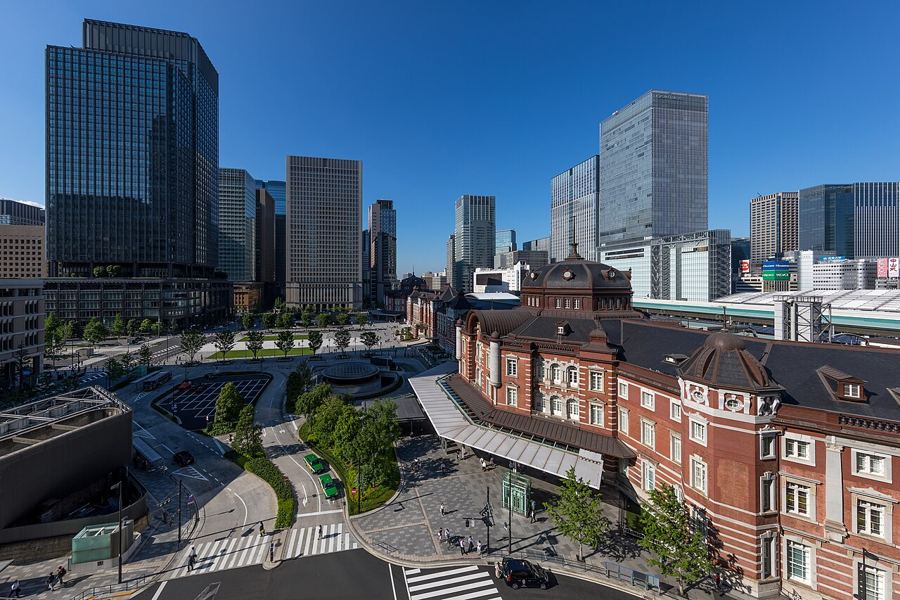 Change here for JapanTokyo by train, the slow way
The ropeway continues down to Tōgendai on the shore of Lake Ashi.
Lake Ashi by boat
Lake Ashi fills part of the old caldera. Sightseeing boats, some built to look like pirate ships, cross it from Tōgendai to Hakone-machi and Moto-Hakone in about half an hour. The crossing gives the best chance of seeing Fuji's cone above the hills to the north-west, with the red torii of Hakone Shrine standing in the water near Moto-Hakone.
From Moto-Hakone, walk to Hakone Shrine through tall cedars, then along a section of the old Tōkaidō road, where giant cedar trees line a stone-paved path once used by travellers between Edo and Kyoto. The reconstructed Hakone Checkpoint, a former Edo-period barrier station, sits nearby. Buses run back down to Hakone-Yumoto from here, completing the loop.
Seeing Mount Fuji
Fuji is often hidden. The mountain is most visible on cold, dry days from late autumn to early spring, especially in the early morning before clouds build. In the humid summer months it may stay invisible for days at a time. If the summit matters to you, give yourself flexibility: stay a night, check the forecast and the webcams in the morning, and do the loop on the clearer day. If it stays hidden, the forests, the steam and the lake still make a fine day out.
Clouds move quickly here, and the mountain can appear for a few minutes and vanish again. Keep looking as you ride the ropeway and cross the lake; the view often opens just as you have given up on it.
Onsen manners
Many inns and public baths in Hakone are fed by natural hot springs. The rules are simple and the same almost everywhere:
- Wash and rinse thoroughly at the seated taps before you get into the bath.
- Baths are taken without swimwear, and men and women usually bathe separately.
- Keep your small towel out of the water; many people fold it on their heads.
- Tie up long hair so it does not touch the water.
- Policies on tattoos vary widely. Some baths refuse them, others allow covered or small tattoos, and private family baths are an option. Ask ahead.
Hakone sits close enough to Tokyo to make an easy break from the city. For a gentler way to ride the capital's own network, read Tokyo by train, the slow way, and for the season when Fuji shows most often, see our notes on winter in East Asia.
Photographs on this platform
- Main photograph: Suicasmo, CC BY-SA 4.0
- Photograph: Syced, CC0
- Photograph: Syced, CC0