
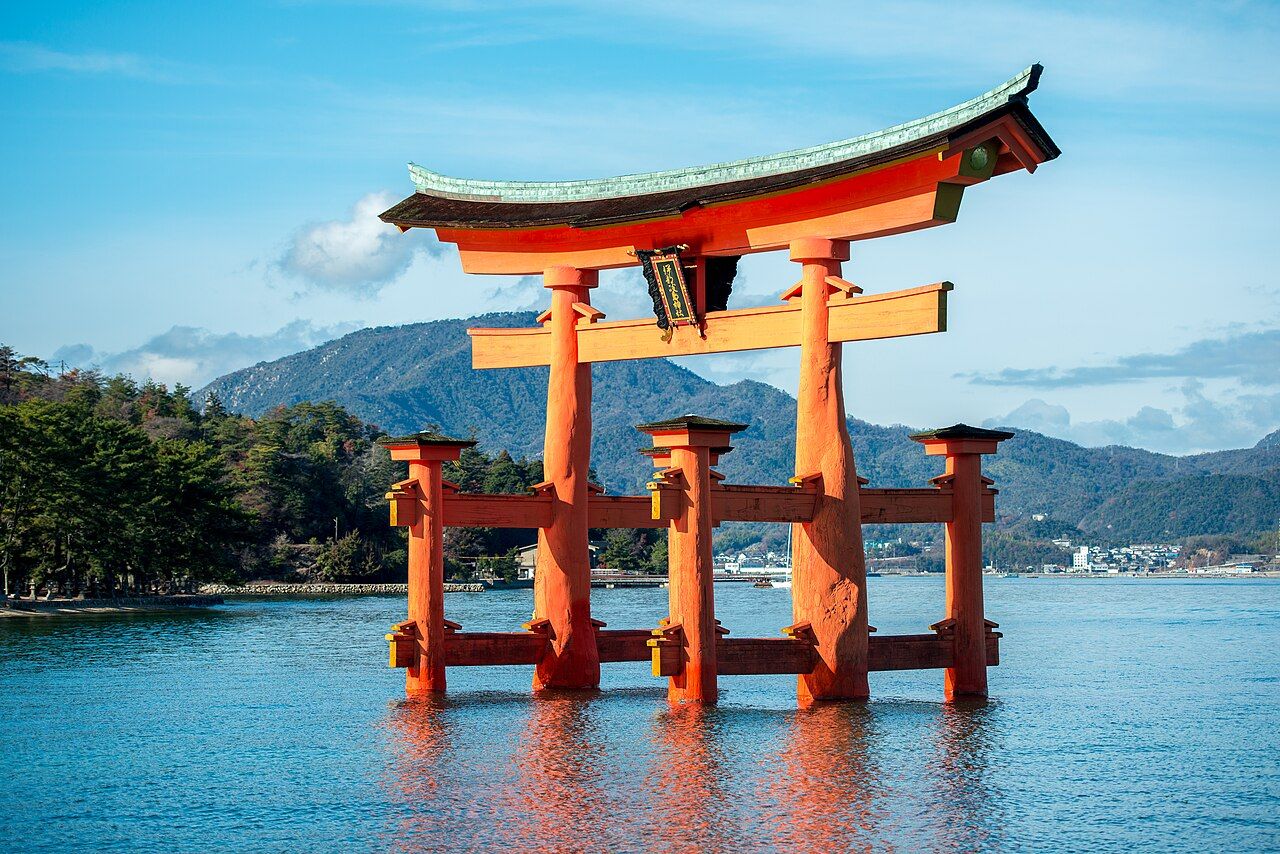
Hiroshima is a modern, green city on a river delta, rebuilt after the atomic bombing of 6 August 1945. Across the bay lies Itsukushima, the island most people know as Miyajima, home to a shrine built over the water and a great vermilion torii that seems to float at high tide. Two days lets you see both without rushing either. Spend the first in the city, at the Peace Memorial Park and museum, and the second on the island.
Day one: the Peace Memorial Park
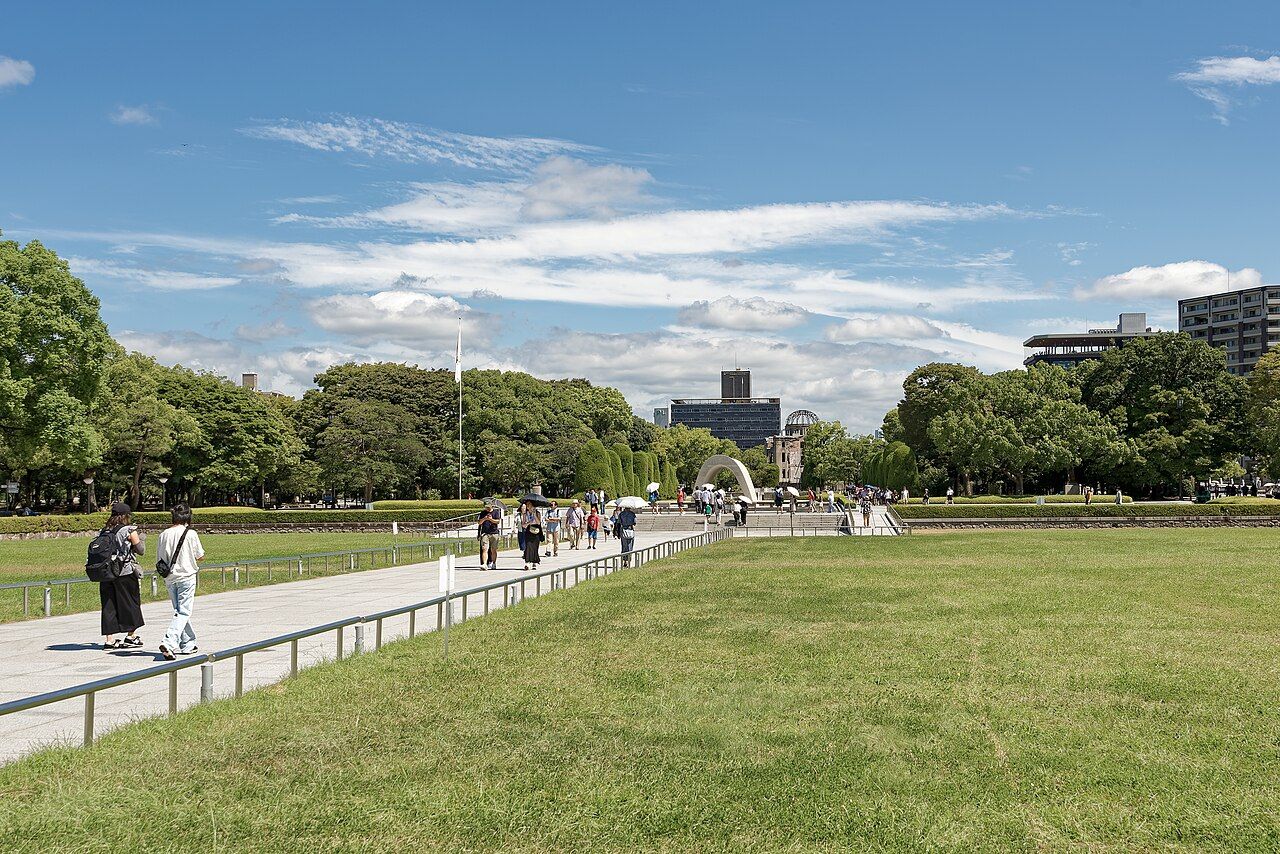
The Peace Memorial Park occupies the delta point where the Ōta River divides, an area that was a busy commercial district before the bombing. Today it is a wide, quiet space of lawns, trees and memorials. The Hiroden tram from Hiroshima Station stops at Genbaku Dome-mae, on the park's northern edge, in around fifteen minutes.
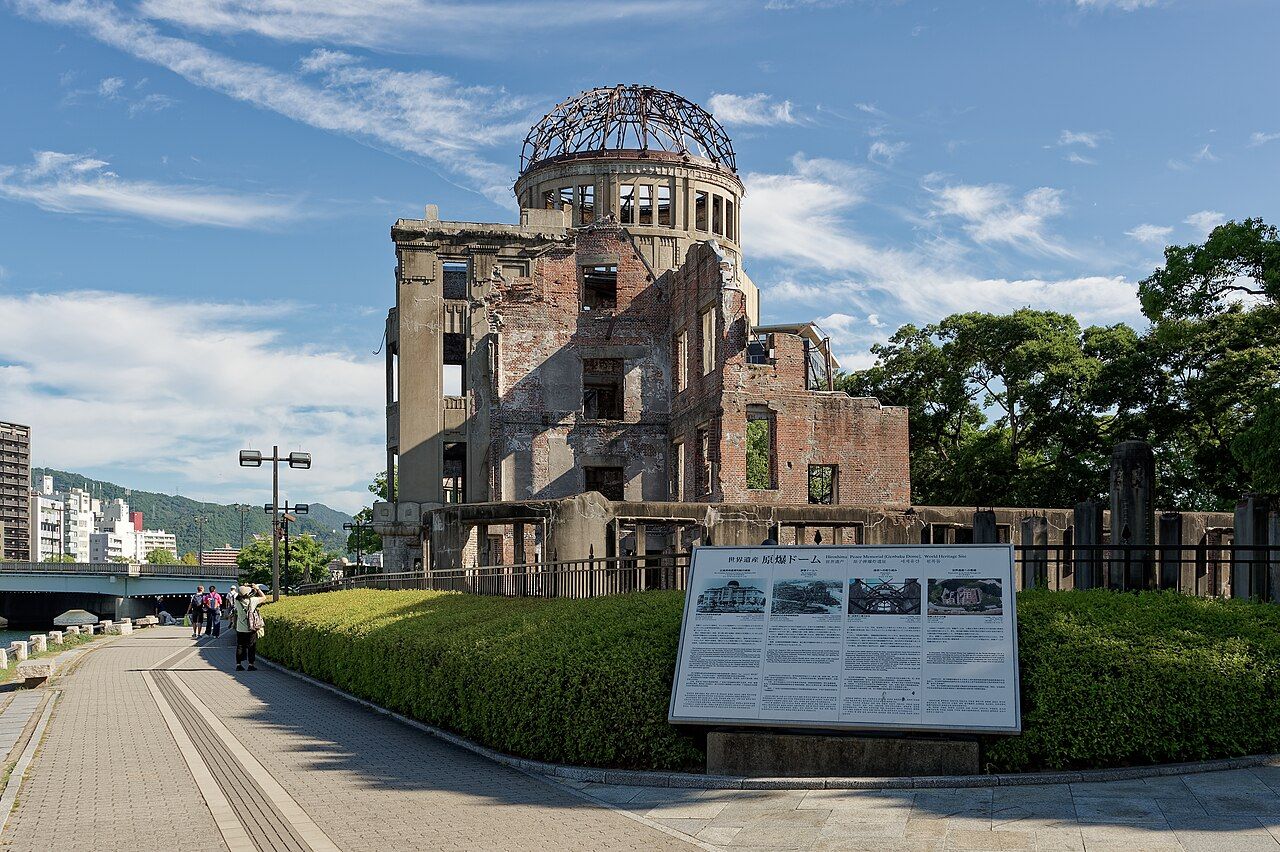
Begin at the A-Bomb Dome, the ruined shell of a prefectural exhibition hall that stood almost directly beneath the explosion. It has been kept as it was left, and it is now a UNESCO World Heritage Site. Read the panels beside it, then cross the river into the park itself.
The Cenotaph for the A-bomb Victims is an arched stone monument that shelters a register of the names of those who died. Stand at it and look north: the Peace Flame and the Dome line up through the arch. Nearby, the Children's Peace Monument is surrounded by thousands of folded paper cranes sent from schools around the world, a tradition linked to a young girl who died of leukaemia years after the bombing.
The Peace Memorial Museum
The Hiroshima Peace Memorial Museum stands at the southern end of the park. It tells the story of the city before the bombing, of the day itself, and of the long aftermath, through personal belongings, photographs and the words of survivors. It is a difficult visit, and it should be. Give it at least two hours, and leave time afterwards to sit outside.
The museum is busy from mid-morning, particularly with school groups, so arriving at opening time helps. Ticketing and opening hours change, so check before you go. Many visitors also find time for the Hiroshima National Peace Memorial Hall for the Atomic Bomb Victims, a quieter, underground space of reflection near the museum.
It is a difficult visit, and it should be.
The rest of the city deserves an evening. Hiroshima Castle, rebuilt after the war, sits in a park to the north, and Shukkei-en, a landscaped garden near the station, offers a calm walk among ponds and small bridges.
A few practical points make the day easier. The park is open at all hours, so you can return in the evening, when the Dome is lit and the riverside is quiet. Many people bring flowers or folded cranes to the Children's Peace Monument; if you wish to leave cranes, place them in the cases provided. Survivors, known as hibakusha, have spoken to visitors for decades, and some testimony sessions are held with interpretation; ask at the museum about current arrangements. Whatever you choose to do, keep the tone of the day in mind. Loud groups, posed selfies and drinking in the park sit badly with the people who come here to mourn.
Hiroshima is also an easy, friendly city to spend an evening in. The trams run along the main streets, the riverbanks are lined with walking paths, and the local style of savoury pancake, layered with noodles and cabbage, is cooked on griddles all over town.
Day two: the ferry to Itsukushima
To reach Itsukushima, take the JR Sanyo Line or the Hiroden tram west to Miyajimaguchi, then a ferry across the strait. The crossing takes about ten minutes, and two ferry lines run frequently from the same pier area. One ferry route passes close to the torii on the way in. A small visitor fee is now collected from people arriving on the island; the rules for paying it change, so check before you go.
 Change here for JapanNara: the Great Buddha and the deer park
Deer also roam Miyajima's streets. Unlike in Nara, feeding them is discouraged, and they will happily eat paper maps and ferry tickets from your pocket. Keep food out of sight.
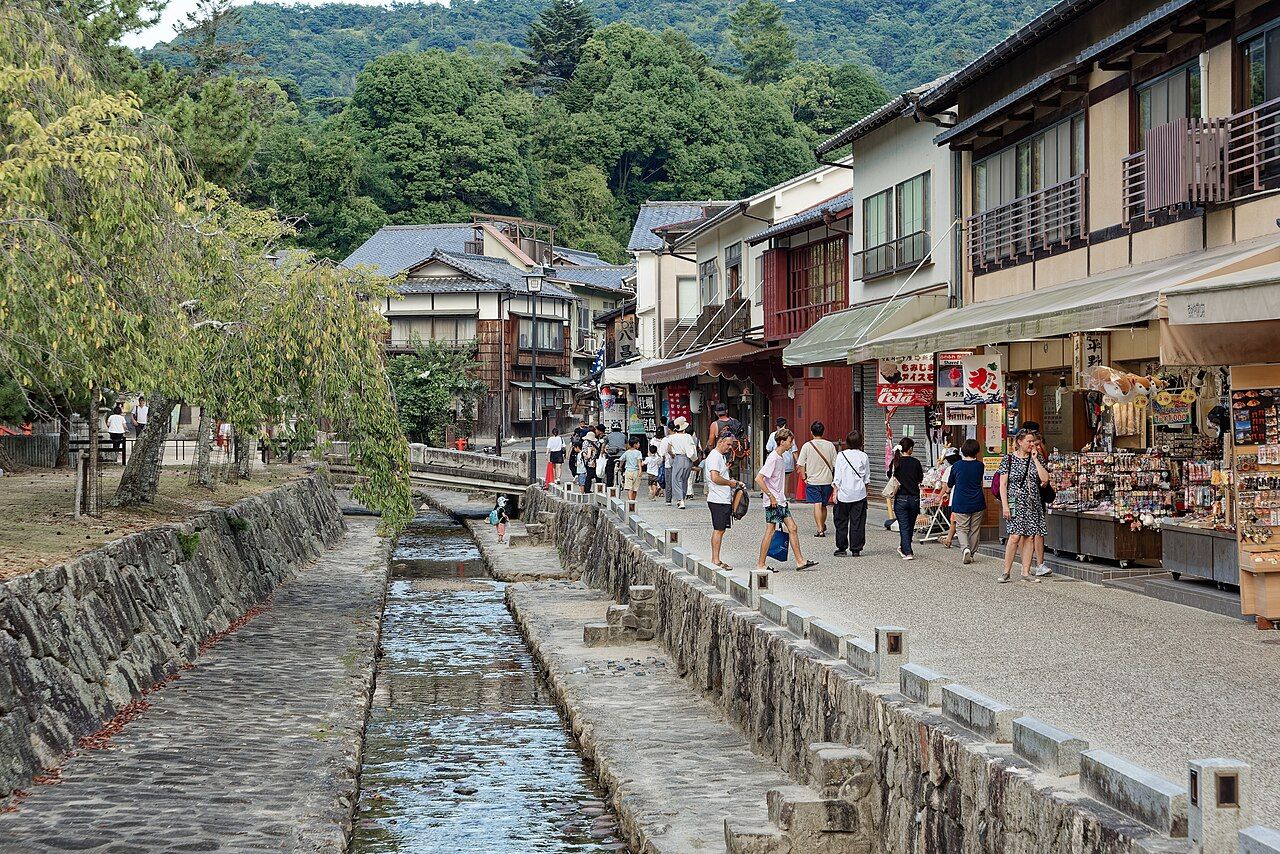
The island's main street runs from the ferry pier towards the shrine, lined with shops selling grilled oysters, maple-leaf cakes and wooden rice scoops, which the island has made for centuries. Behind it, quieter lanes with old merchant houses lead uphill. Most day visitors leave by late afternoon, so staying a night on the island means calm streets in the evening and an early walk before the first ferries arrive.
Itsukushima Shrine and the tides
Itsukushima Shrine has stood on this shore for centuries, its corridors and halls raised on posts above the tidal flats. The island itself has long been considered sacred, which is why the shrine was built over the water rather than on the land. The shrine and the forest behind it are a UNESCO World Heritage Site.
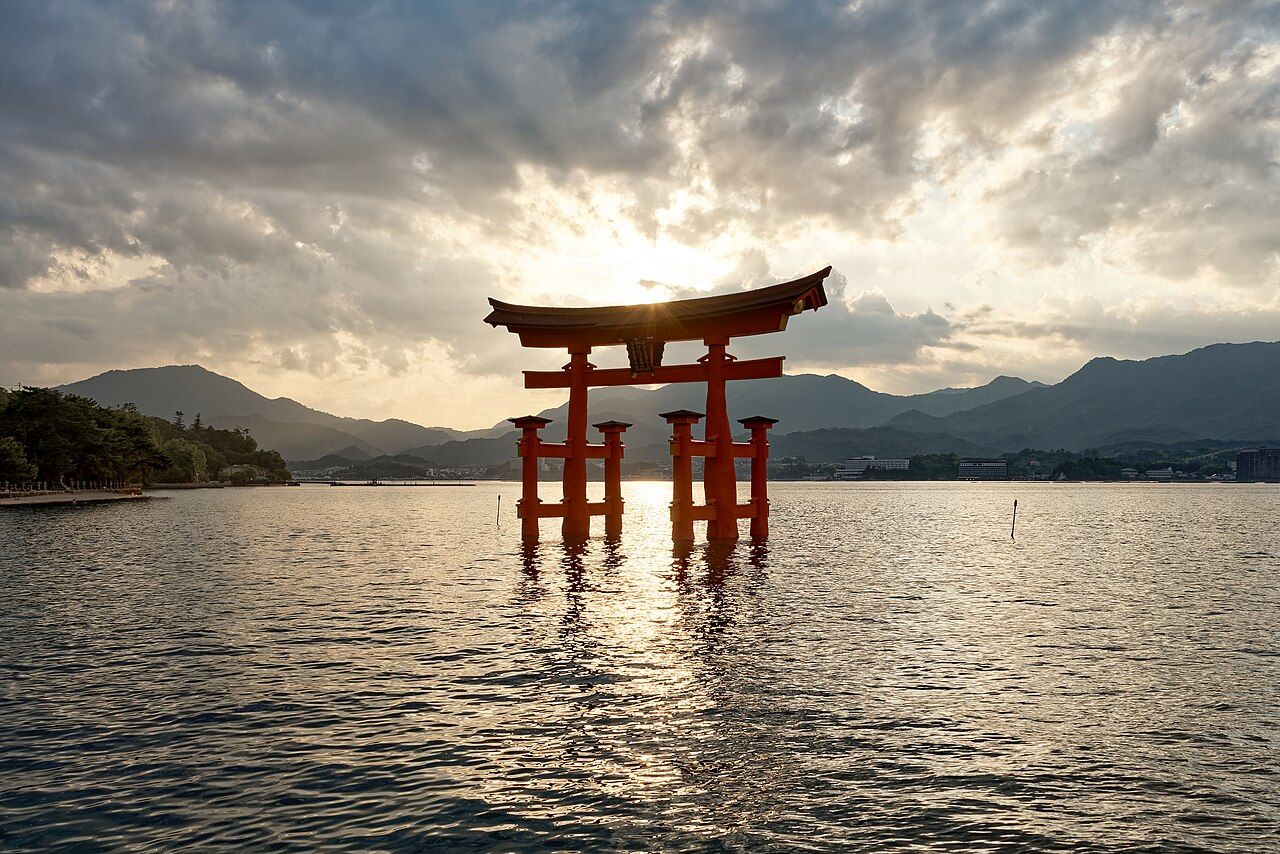
The great torii stands in the bay about two hundred metres from the shrine. It is not buried in the seabed; it stays upright under its own weight. At high tide the water surrounds both shrine and gate, and the whole complex appears to float. At low tide you can walk out across the sand to the foot of the torii itself. Both are worth seeing, so check the tide tables before you plan your day and try to catch one of each.
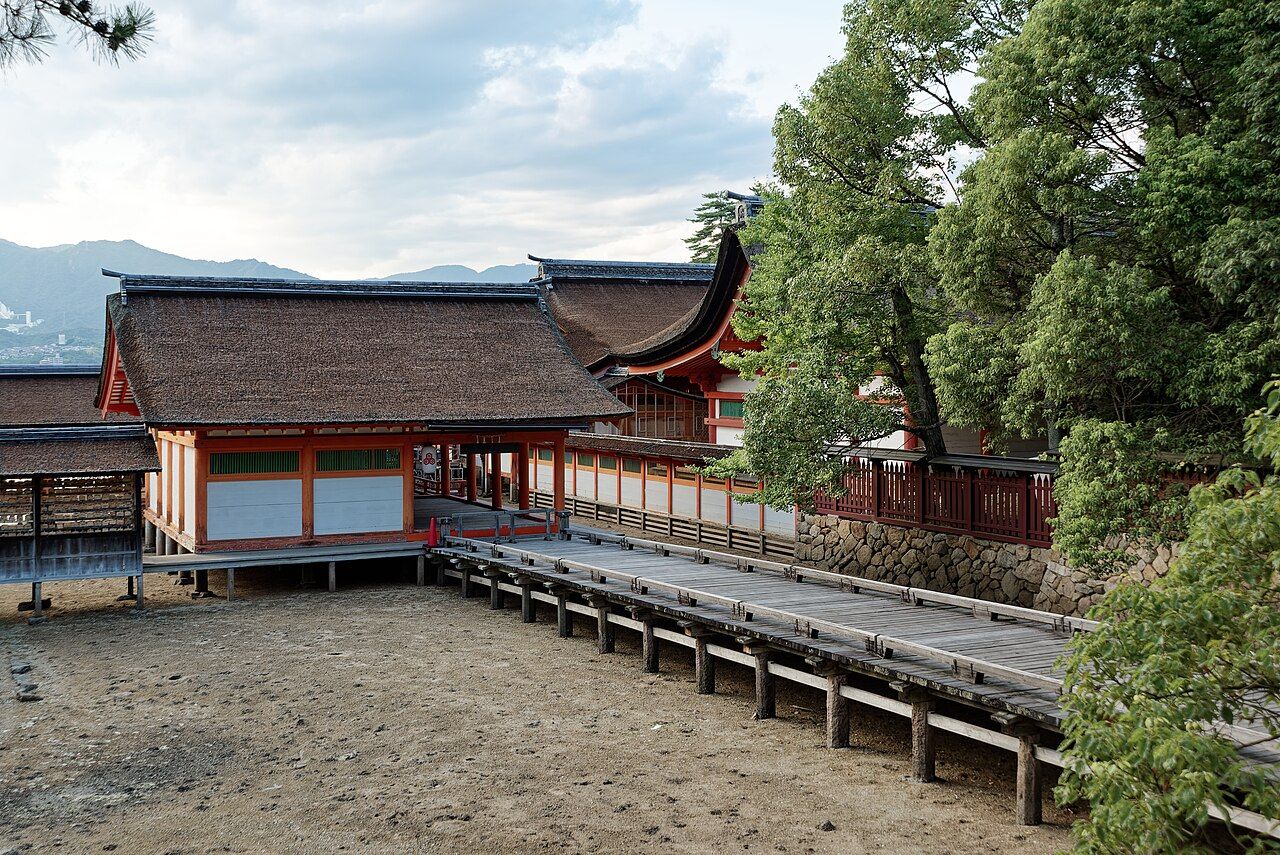
Walk the shrine's covered corridors, then explore the streets behind it. Daishō-in, a temple at the foot of the mountain, has paths lined with small stone figures and a long flight of steps with prayer wheels set into the handrail.
The island's five-storey pagoda and the large hall of Senjōkaku stand on a small hill just above the shrine, and both are worth a short detour. In the evening the torii and the shrine are lit, and boats sometimes take visitors out towards the gate after dark; schedules change, so check locally.
Mount Misen
Mount Misen, the island's highest point, gives a wide view over the Inland Sea and its scattered islands. A ropeway carries you most of the way up, with a walk of around half an hour from the top station to the summit. Hiking trails also climb from the town, taking around one and a half to two hours each way, with plenty of steps. The ropeway pauses in strong wind, so check before you go.
Near the summit, small temple halls keep a flame said to have burned for more than a thousand years. Wild monkeys and deer live on the mountain; give both space. On a clear day, the late afternoon light over the water is a fine end to a long and thoughtful two days. From here, the shinkansen runs east to Kyoto in under two hours; our guide to Kyoto before the crowds picks up the next stop, or read about rail passes in Japan before you plan.