
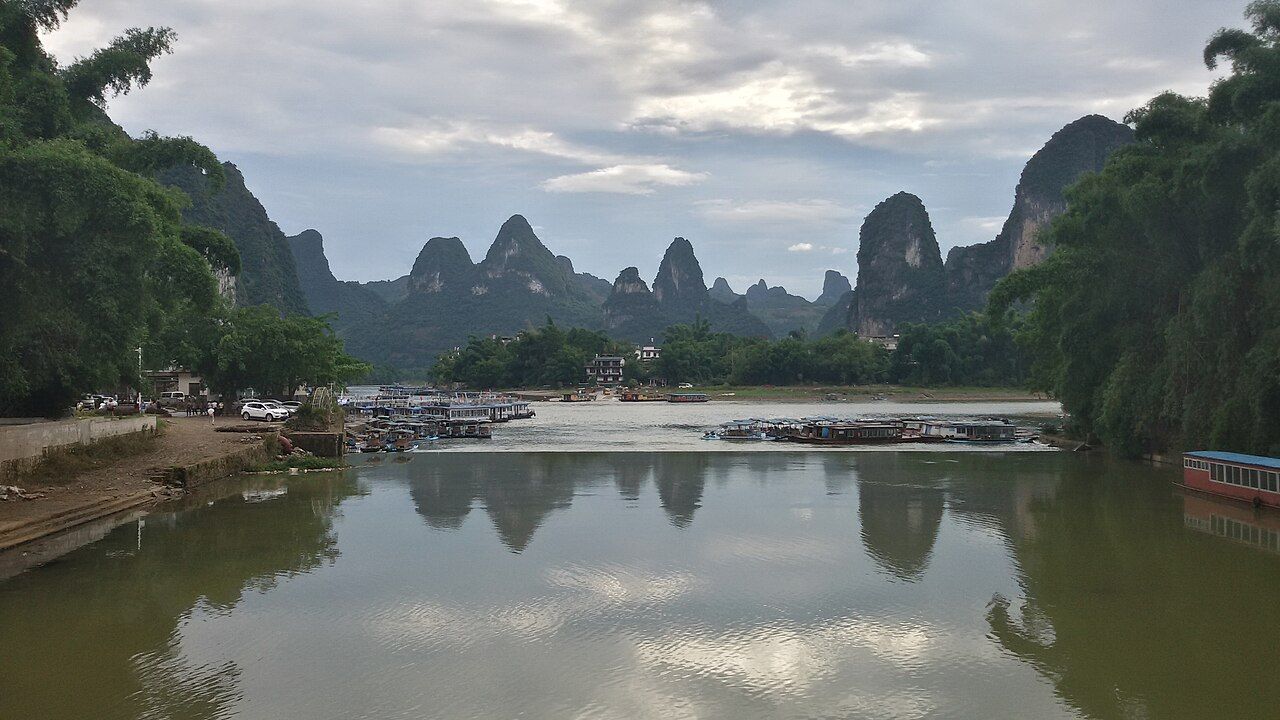
The stretch of the Li River between Guilin and Yangshuo is one of the most painted landscapes in China, and it earns the attention. Limestone towers rise straight out of flat farmland, the river bends slowly between them, and on misty mornings the far peaks fade in layers like ink washed onto paper. This stop on the line is about seeing that country at the pace it asks for: one day on the water, a few more on a bicycle, and a willingness to let the weather decide part of the plan.
Getting there by rail
High-speed lines now reach this corner of Guangxi from Guangzhou, Guiyang and further afield. Trains stop at Guilin and at a station serving Yangshuo that sits a fair way outside the town, so allow time for a bus or taxi over the last stretch. Guilin is worth a night of its own for the river walks in the centre and the hills that rise between the apartment blocks, but most travellers base themselves in or around Yangshuo, where the karst country starts at the edge of town.
Every rail ticket in mainland China is issued to a named passenger, so you need your passport to buy it, to pass the station entrance and again at the ticket check. The details are in the guide to rail passes and high-speed trains. Visa rules for China change from time to time, so check before you go.
Boat or raft
There are two broad ways onto the river. The classic option is a larger cruise boat that leaves from piers downstream of Guilin and sails to Yangshuo over several hours, with the towers sliding past in a long procession. It is comfortable, covered and well suited to a wet day. The other option is a shorter trip on a raft along one section of the river, often near Xingping. Despite the old name, most of these rafts are no longer bamboo, and many carry a small motor. On the smaller Yulong River, rafts are usually poled by hand, which is slower and quieter.
Ticketing, routes and the rules about who may sell trips have changed several times over the years, and water levels can move the starting point of a cruise. Buy through official counters or your accommodation's front desk rather than from people approaching you in the street, and check what is included before you pay. In the dry season, low water sometimes shortens trips; after heavy rain, sailings can be suspended altogether.
Xingping and the banknote view
Xingping is an old river town upstream of Yangshuo, with a lane of grey-brick houses, a small square and a landing where boats wait for passengers. The river near here supplies the scene on the back of the twenty-yuan note, and people line up on the bank to hold the note against the hills. It is a harmless ritual, and the view earns it.
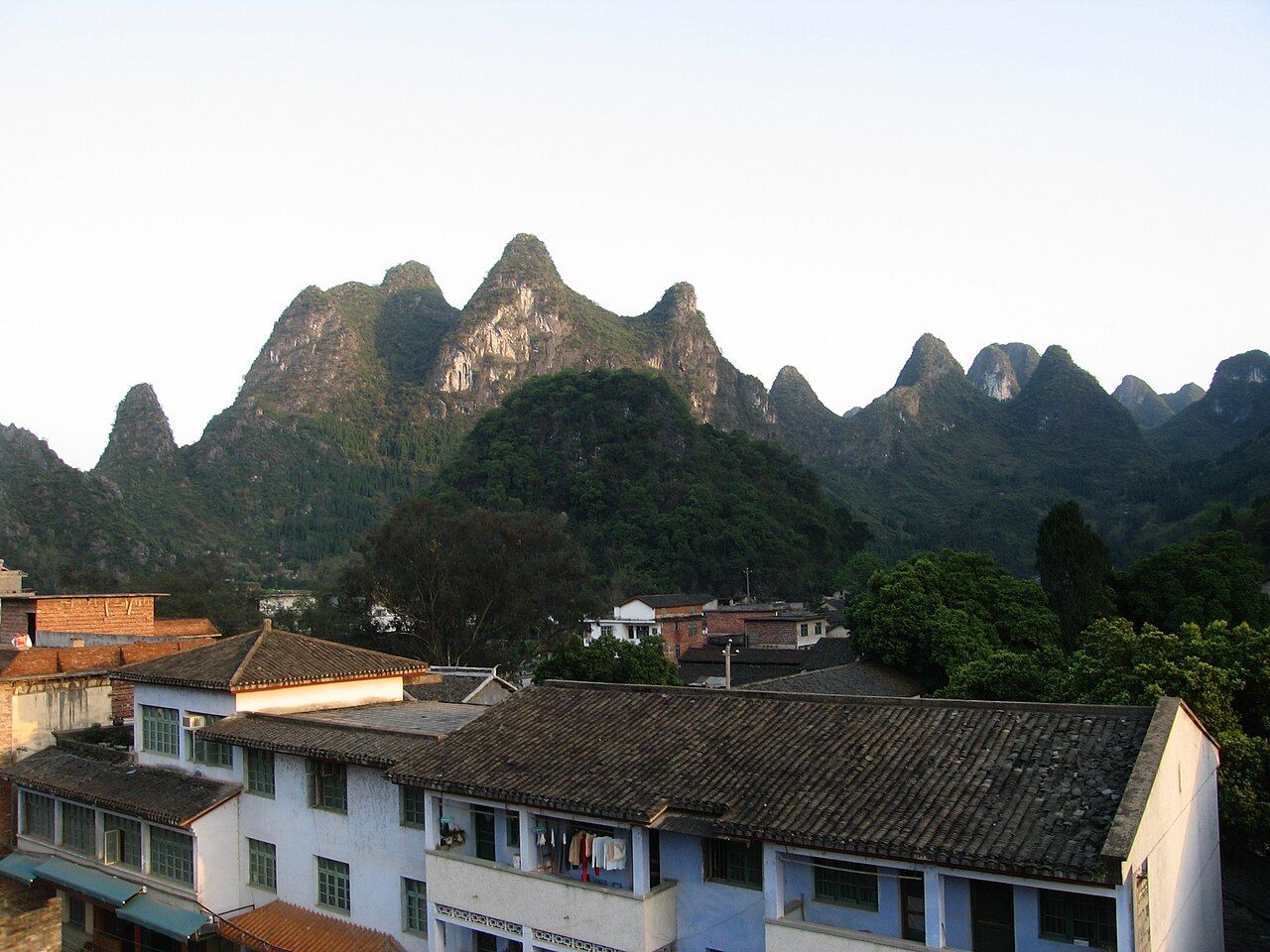
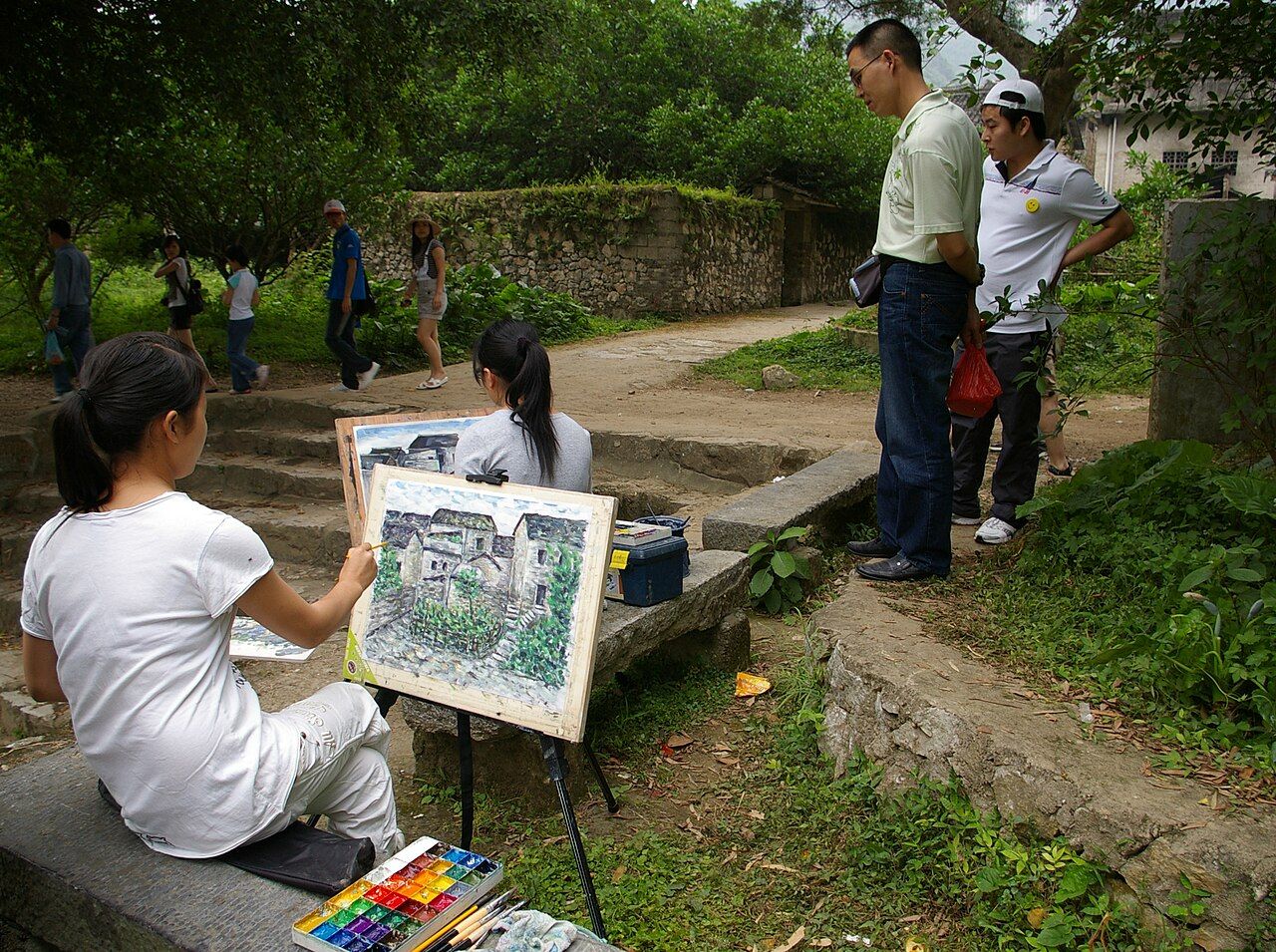
For a wider view, climb one of the hills above the town at first light. The paths are steep and stepped, and the reward is the river curling below you with peaks folding away in every direction. Go early, carry water and a torch, and come down before the heat builds. In the lanes, you often find art students at their easels painting the houses and the hills, a reminder that this landscape has been studied for a very long time.
The river is the famous part, but the valleys behind it are where the country opens up.
Cycling the Yulong valley
The river is the famous part, but the valleys behind it are where the country opens up.  Change here for ChinaHangzhou's West Lake and the Longjing tea hills The Yulong River runs roughly parallel to the Li west of Yangshuo, and the land along it is a patchwork of rice paddies, orchards and villages linked by lanes and farm tracks. A bicycle, or an electric bike if the heat is fierce, lets you follow it for a day without a plan. Rental shops are easy to find in town; check the brakes and the tyres before you leave and ask for a lock.
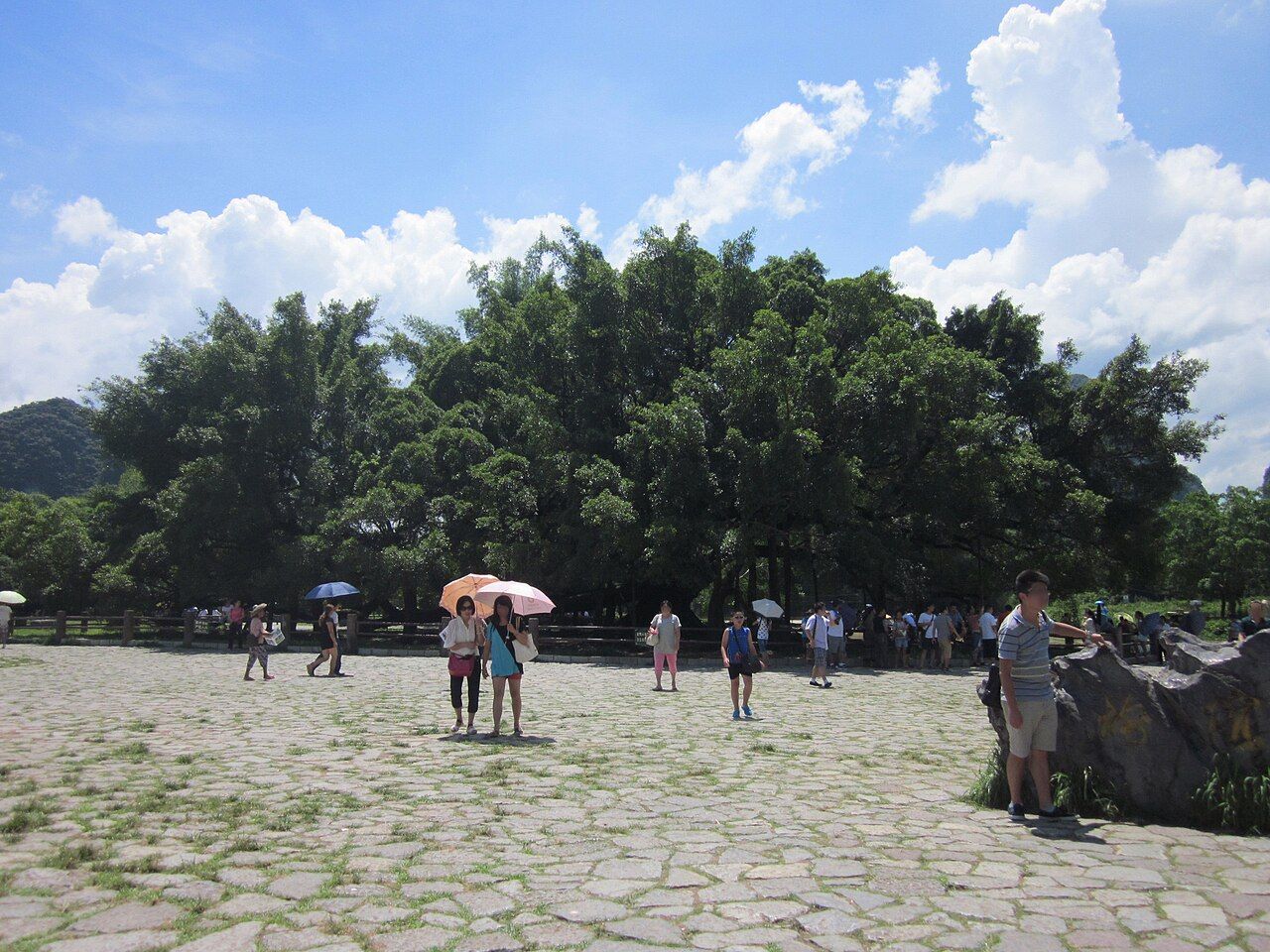
The old stone Dragon Bridge, an arched crossing from the Ming dynasty, makes a natural turning point. Along the way you pass water buffalo, roadside fruit sellers and ancient banyan trees that shade whole squares. South of town, Moon Hill is a karst peak pierced by a great natural arch, reached by a long flight of steps. Main roads can be busy with buses and electric scooters, so keep to the smaller lanes where you can, and stop often.
- Start early and rest through the hottest hours.
- Carry more water than you think you need, plus cash for small purchases.
- Download an offline map before you set out; signposting on farm tracks is patchy.
- Expect mud after rain and plan a shorter loop.
Rain, mist and the seasons
This is a wet part of China. Spring and early summer bring the heaviest rain, and the river can rise quickly; boats stop and some low lanes flood. Summer is hot and humid, with storms that clear the air for an hour before the heat returns. Autumn tends to be drier and clearer, which suits cycling and long views. Winter is cool and often grey, with lower water and fewer visitors.
The rain is not all loss. The mist that hangs between the peaks after a wet night is the look the painters chased, and a grey morning on the river can be more striking than a bright one. Pack a light rain jacket rather than an umbrella if you plan to cycle, keep your phone and passport in a dry bag on the water, and build a spare day into your plans so one storm does not cost you the river.
Slow evenings in Yangshuo
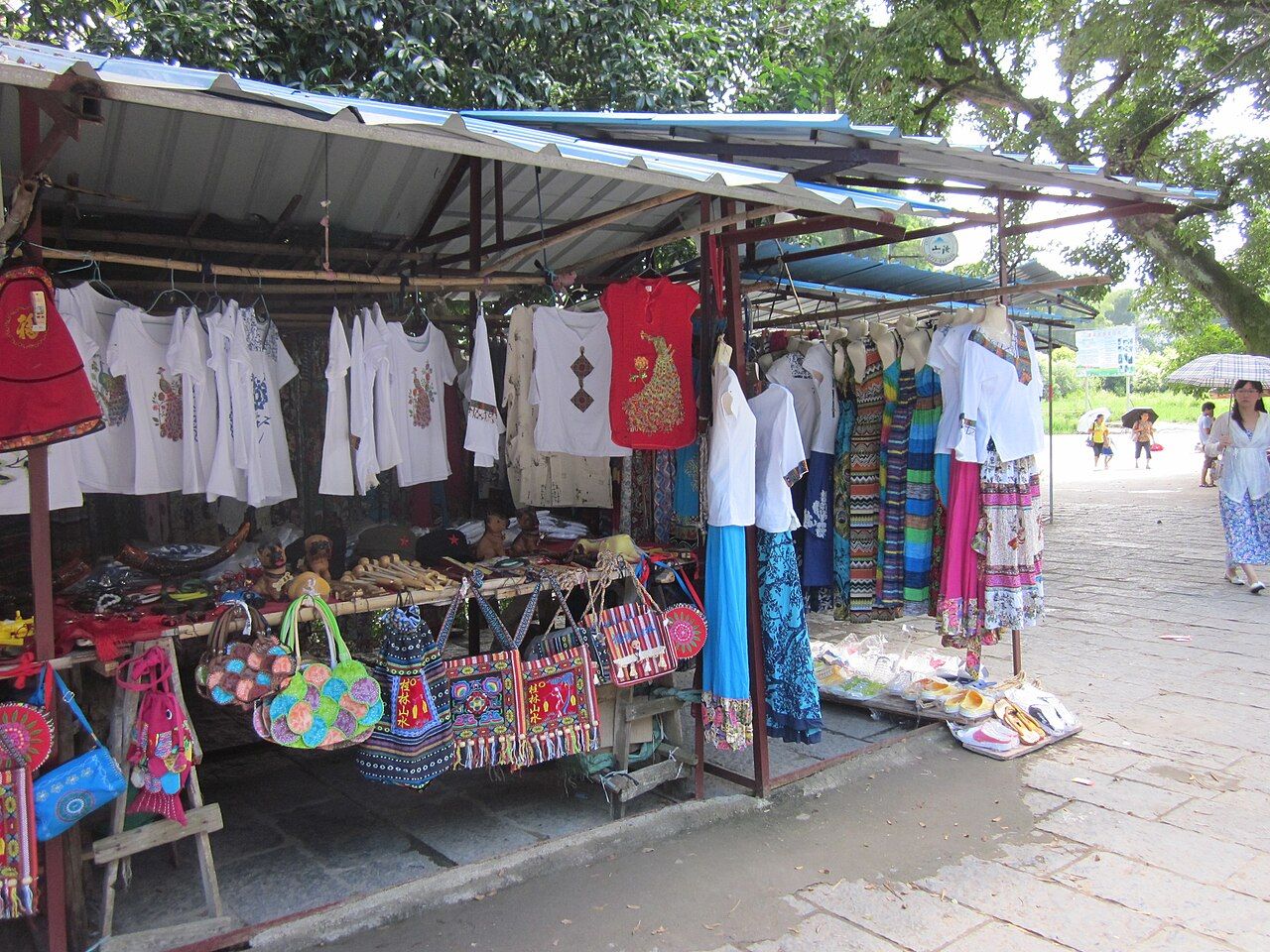
Yangshuo's central streets fill with visitors after dark, with music, lights and stalls selling embroidered bags and shirts. It is lively and easy to enjoy for an hour. For quieter nights, stay out in the villages along the Yulong, where the evenings are frogs, insects and the outline of the peaks against the sky. Eat what the region does well: rice noodles in the morning, river fish, and dishes braised with local beer. Guilin rice noodles are a regional staple, served in many variations from early morning, and a bowl at a plain neighbourhood counter is one of the cheapest good meals in the country.
If you are travelling on through China by train, the karst country makes a good break between big cities. It pairs well with the long rail days that link Xi'an and its ancient wall or the lane houses of Shanghai to the south. And when you sit down to that bowl of noodles, the guide to chopsticks and table manners covers the small habits that make a shared table easier.
Photographs on this platform
- Main photograph: PQ77wd, CC BY-SA 4.0
- Photograph: Huangdan2060, CC0
- Photograph: Chinatravelsavvy, CC BY-SA 3.0
- Photograph: Jakub Hałun, CC BY-SA 4.0
- Photograph: Huangdan2060, CC0