
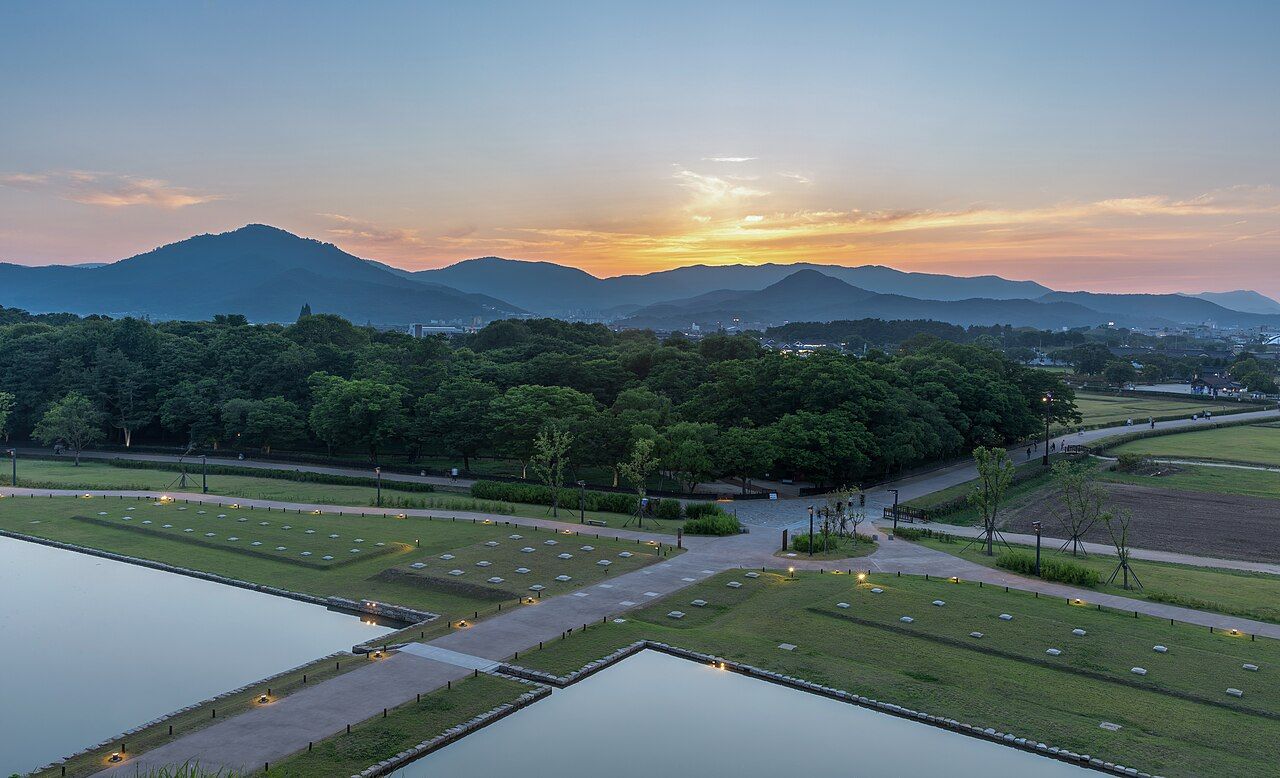
Gyeongju is a small city with a very long memory. For close to a thousand years it was the capital of Silla, the kingdom that eventually unified much of the Korean peninsula, and the remains of that age are everywhere: grass-covered royal tombs between the houses, temple foundations in the fields, stone pagodas on the hills. So much survives in the open that Gyeongju is often called a museum without walls, and much of the area is listed as a World Heritage site. This stop on the line takes it slowly, by bicycle and on foot.
Getting there
High-speed KTX trains from Seoul reach Gyeongju in a few hours, stopping at a station some distance west of the centre. Local buses and taxis connect the station with the city and with the main historic areas. Express buses from Seoul and Busan arrive closer to the centre, and Busan itself is a short hop away, so Gyeongju fits easily into a trip down the east side of the country. The guide to rail passes and high-speed trains covers the KTX and passes in general terms; check current fares and timetables before you go.
The tombs in the city
The heart of Gyeongju is the Tumuli Park, an area of great grassy mounds that are the tombs of Silla kings, queens and nobles. Some are as tall as a house, and in the soft light of evening their curves look like a line of low green hills. One tomb has been excavated and opened, so you can step inside and see how it was built, with a display of the objects found there, including a famous painting of a flying horse on a saddle flap.
Around the park, more tombs rise in fields and between houses. A short walk leads to Cheomseongdae, a stone tower from the seventh century thought to be one of the oldest surviving astronomical observatories in East Asia. Nearby, the site of the Wolseong palace is a long wooded ridge above the river.
Lotus ponds and lit bridges
At Donggung Palace and Wolji Pond, a few reconstructed pavilions stand beside an artificial lake built for royal banquets. By day it is a pleasant garden; after dark the pavilions are lit and their reflections lie perfectly still on the water. It is the busiest place in Gyeongju in the evening, and for good reason. Arrive just before dusk and stay as the light changes.
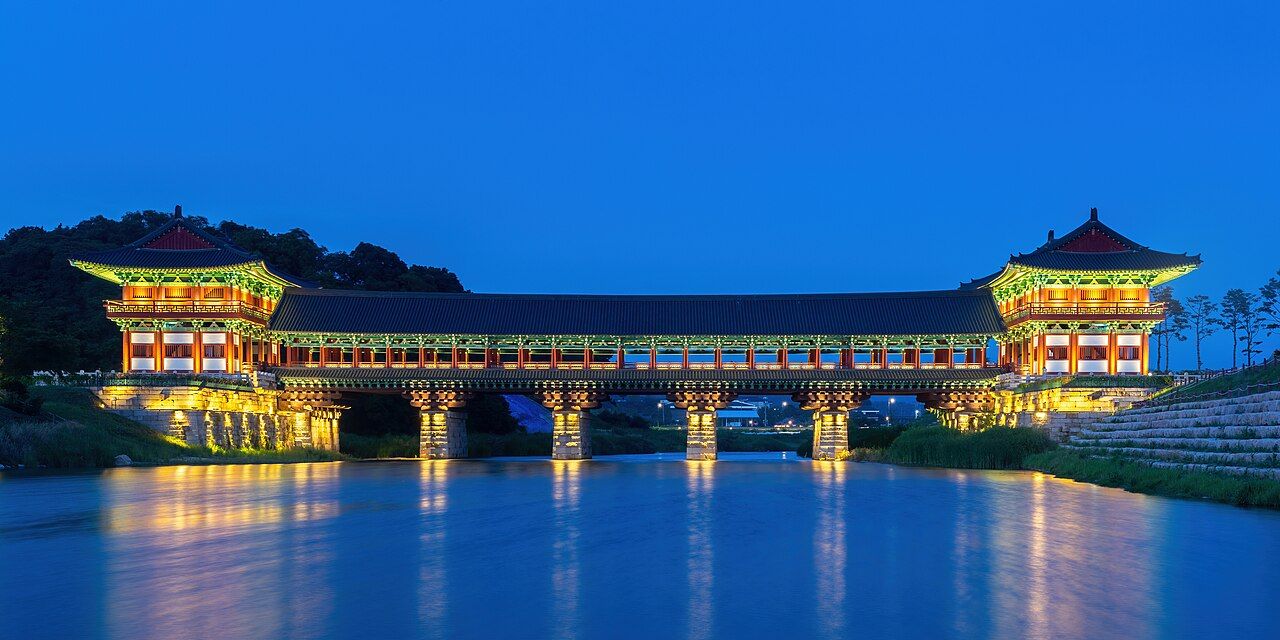
A little further on, the covered Woljeonggyo bridge has been reconstructed across the river on the site of a Silla bridge, with gate pavilions at each end. Its lights reflect in the water at night. 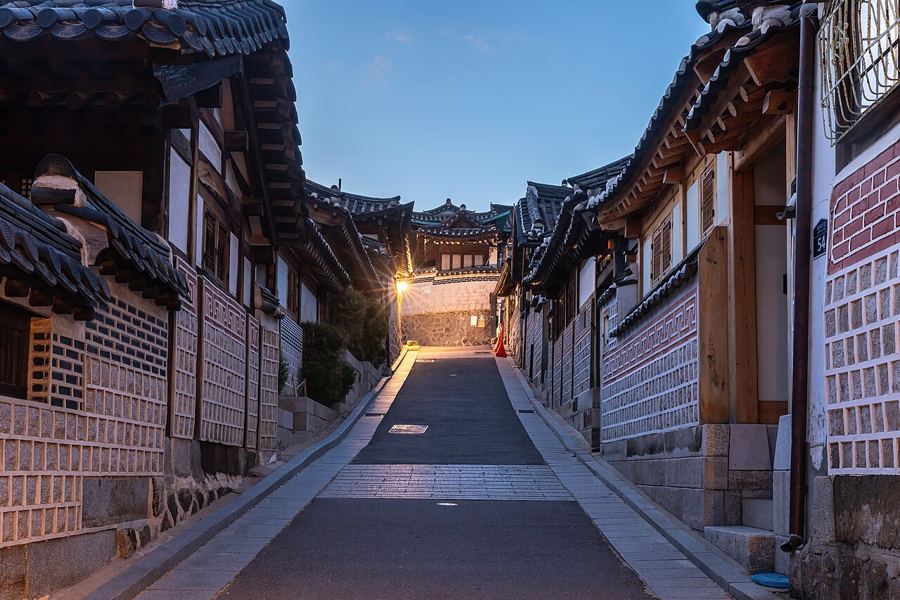 Change here for KoreaSeoul's palaces and hanok lanes The Gyeongju National Museum, close by, holds the treasures from the tombs, including gold crowns, and a great bronze bell outside in its own pavilion. Give it at least a couple of hours.
Bulguksa and Seokguram
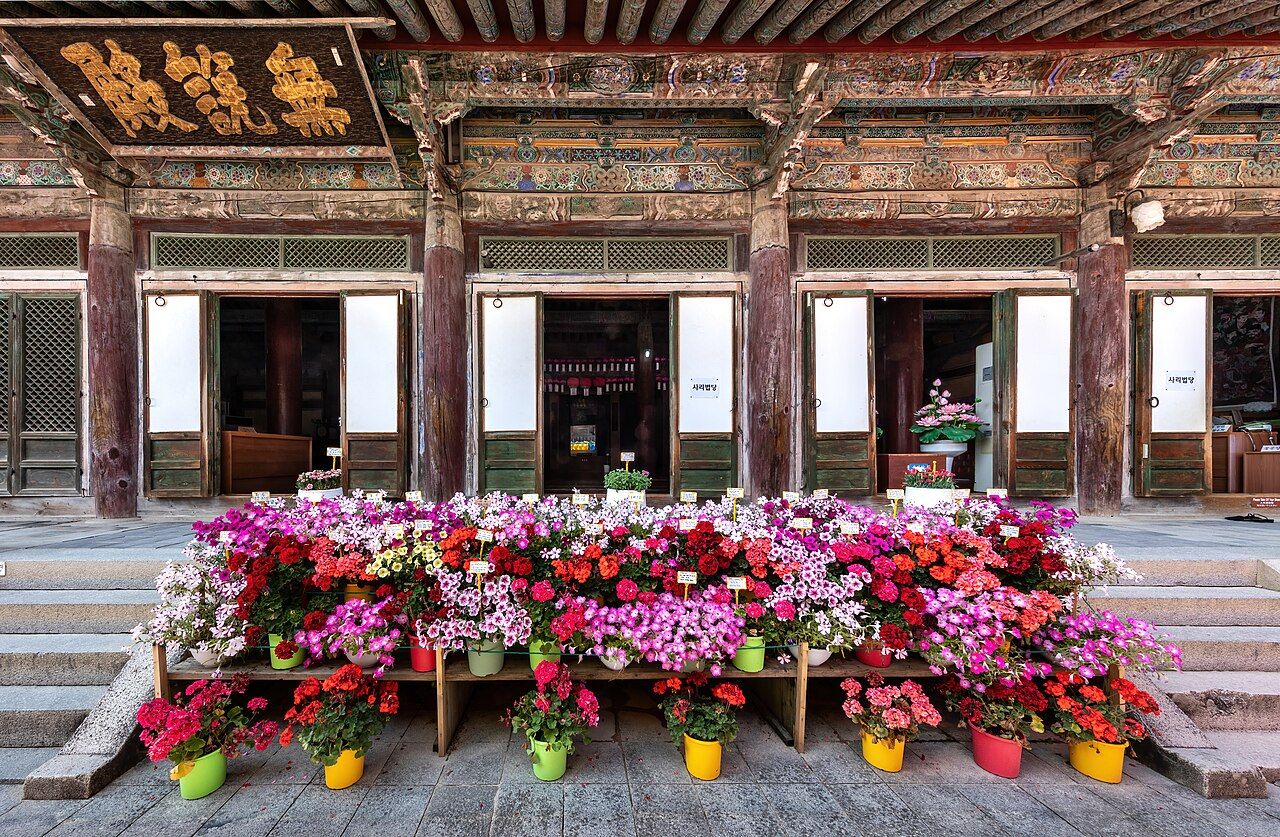
On the slopes of Tohamsan, south-east of the city, Bulguksa is one of the great Buddhist temples of Korea. It was founded in the Silla period and has been rebuilt over centuries. The stone stairways and bridges at its entrance and the two stone pagodas in its main courtyard date from the original building. Inside the gates, halls with painted beams and carved doors frame the courtyards, and flowers are often set out before the halls.
Higher up the mountain, the Seokguram grotto shelters a great seated Buddha carved from granite in an artificial cave, facing east towards the sea. The figure is protected behind glass and photography is not allowed, but the stillness of the place stays with you. Buses link the two sites, or you can walk the forest path between them. Both are active places of worship, so dress modestly and keep your voice low.
By bicycle through the seasons
Gyeongju is mostly flat in the centre, and the best way between the sites is by bicycle. Rentals are easy to find near the bus terminal and the main sights. Cycle paths follow the river and the edges of the fields, and you can link the tombs, the observatory, the ponds and the museum in a gentle loop. Wear a helmet where one is available, watch for traffic on the main roads, and lock your bike when you stop.
In early spring, the cherry trees along the roads and around Bomun Lake turn the whole city pink for a week or two, and the crowds follow. Autumn brings maples, ginkgoes and clear skies, and is quieter. Summer is hot and humid, with the rainy season in the middle of it, and winter is cold and dry but often bright. Spring and autumn suit cycling best.
A slow two days
Gyeongju is worth two nights. On the first day, cycle between the tombs, Cheomseongdae and the museum, and end at Wolji Pond after dark. On the second, take the bus out to Bulguksa and Seokguram, and spend the evening by the river or around the lit bridge. With a third day, the old village of Yangdong to the north preserves traditional houses that are still lived in, and the coast is not far.
From here, trains run on to Busan or back to Seoul's palaces and hanok lanes. For the Korean table, with its spoon, metal chopsticks and side dishes, read the guide to chopsticks and table manners before your first meal.
Photographs on this platform
- Main photograph: Basile Morin, CC BY-SA 4.0
- Photograph: Basile Morin, CC BY-SA 4.0
- Photograph: Basile Morin, CC BY-SA 4.0