
Kanazawa sits on the Sea of Japan coast, between the mountains and the water, and for centuries it was the seat of the powerful Maeda clan. The city avoided heavy bombing in the Second World War, so much of its old fabric survives: a samurai quarter, teahouse districts, temples and one of the finest landscape gardens in the country. It is a city to walk, slowly, in any weather.
Getting there
The Hokuriku Shinkansen links Tokyo and Kanazawa directly, a journey of around two and a half to three hours depending on the train. The line has since been extended south along the coast, which makes Kanazawa an easy stop between Tokyo and the Kyoto area. Reserved seats sell out at holiday times, so book ahead when you can. Our guide to rail passes and high-speed trains explains when a pass covers this route and when single tickets work out better.
From Kanazawa Station, with its great wooden gate, local buses run to all the main sights, and the city centre is compact enough to walk once you are there.
Kenroku-en
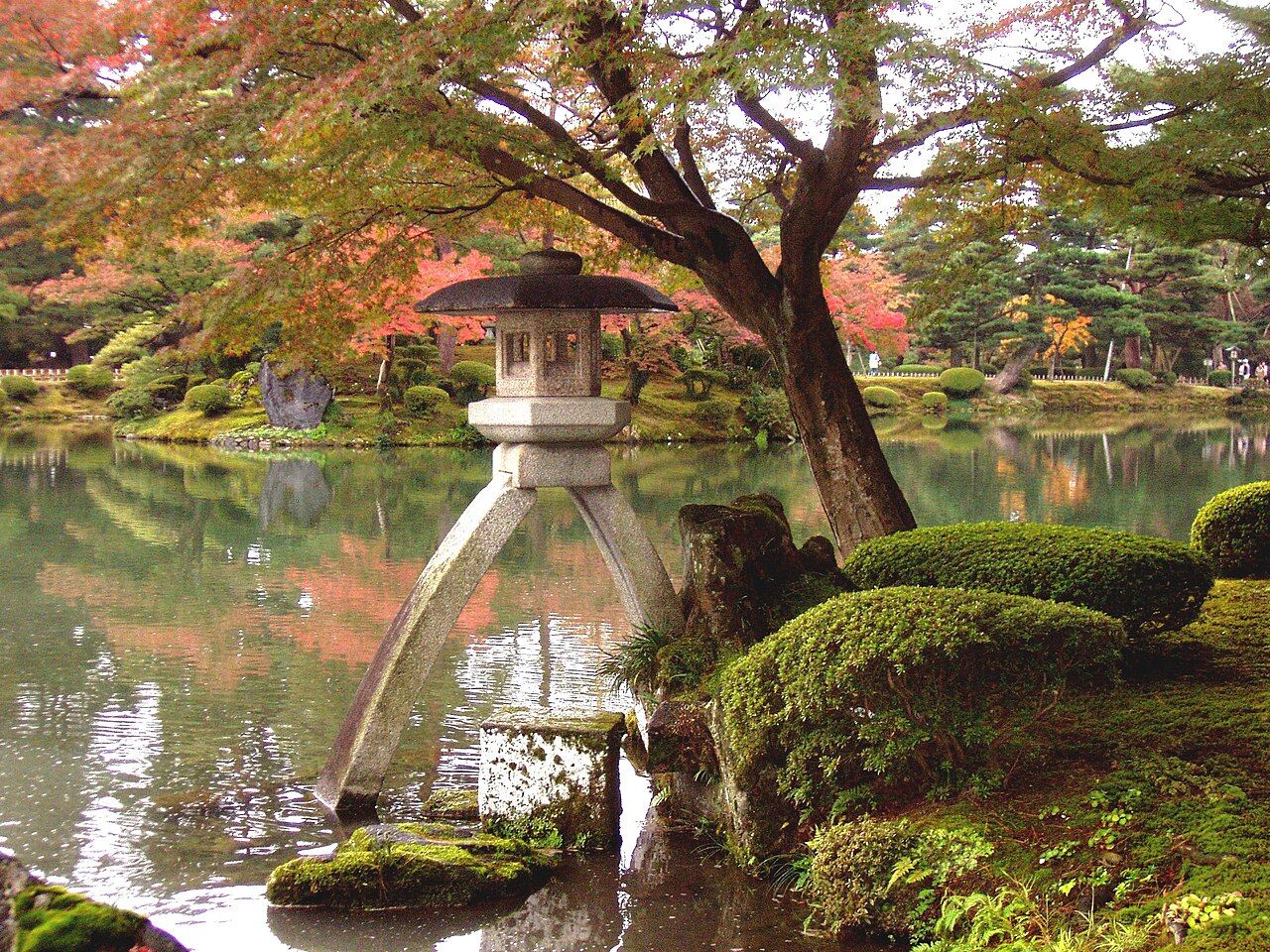
Kenroku-en is counted among the three great gardens of Japan. It was developed over several generations by the Maeda lords, and its name refers to six qualities a perfect garden should combine, including spaciousness, seclusion and water. Ponds, streams, teahouses and old pines spread across a raised site in the centre of the city.
The garden's best-known image is the Kotoji-tōrō, a stone lantern with two legs of different lengths, one standing in the water and one on the bank. In winter, ropes are strung from tall poles to the branches of the pines in a cone, to stop heavy snow breaking them. These yukitsuri ropes go up in early winter, and the sight of them under snow is one of the reasons to visit in the cold months.
Arrive at opening time for the quietest hour. The garden opens early in the morning, with hours varying by season, so check before you go.
Take your time. The garden is designed to be walked slowly, with each turn of the path opening a new view: a pond with a stone bridge, a mossy slope under old trees, a teahouse beside running water. In spring the cherries and plum trees bloom, in early summer the irises, and in autumn the maples turn red against the dark pines. From the garden's higher ground you can see out over the city towards the coast.
The castle park
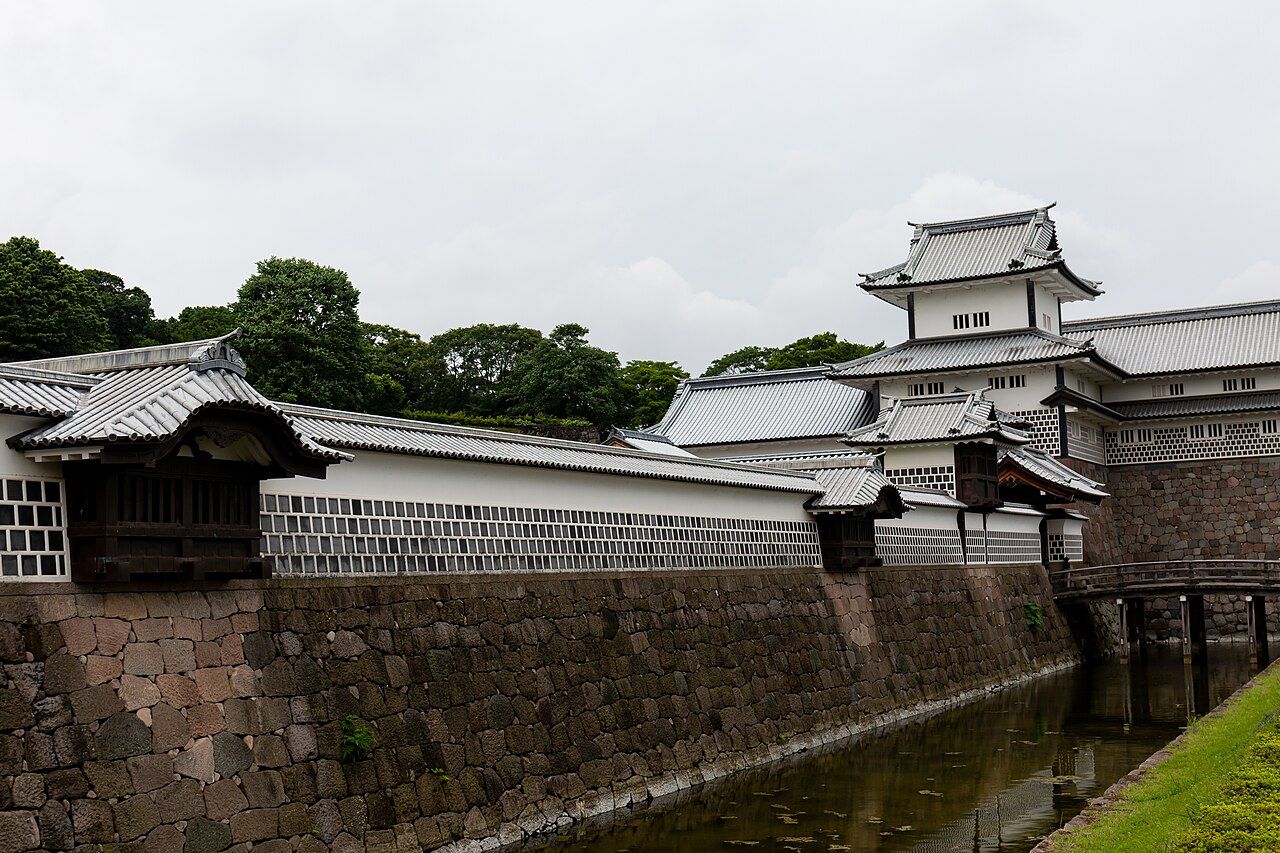
Kanazawa Castle Park sits directly across a road from Kenroku-en, connected by a bridge, so the two make a natural pair. The castle's main keep is long gone, but its stone walls, white-walled storehouses and the reconstructed gates and turrets give a strong sense of its scale. The Ishikawa-mon gate, facing the garden, is an original survivor.
Look closely at the stone walls. Different sections were built in different periods, and the styles of stonework change from rough natural boulders to precisely cut blocks. The park itself is free to wander, with wide lawns that are pleasant for a rest between sights.
Next to the garden, the 21st Century Museum of Contemporary Art is housed in a low, round glass building, with some installations visible free of charge in its public areas. It makes a striking contrast with the old town around it.
 Change here for JapanKyoto before the crowds
Higashi Chaya and the teahouse streets
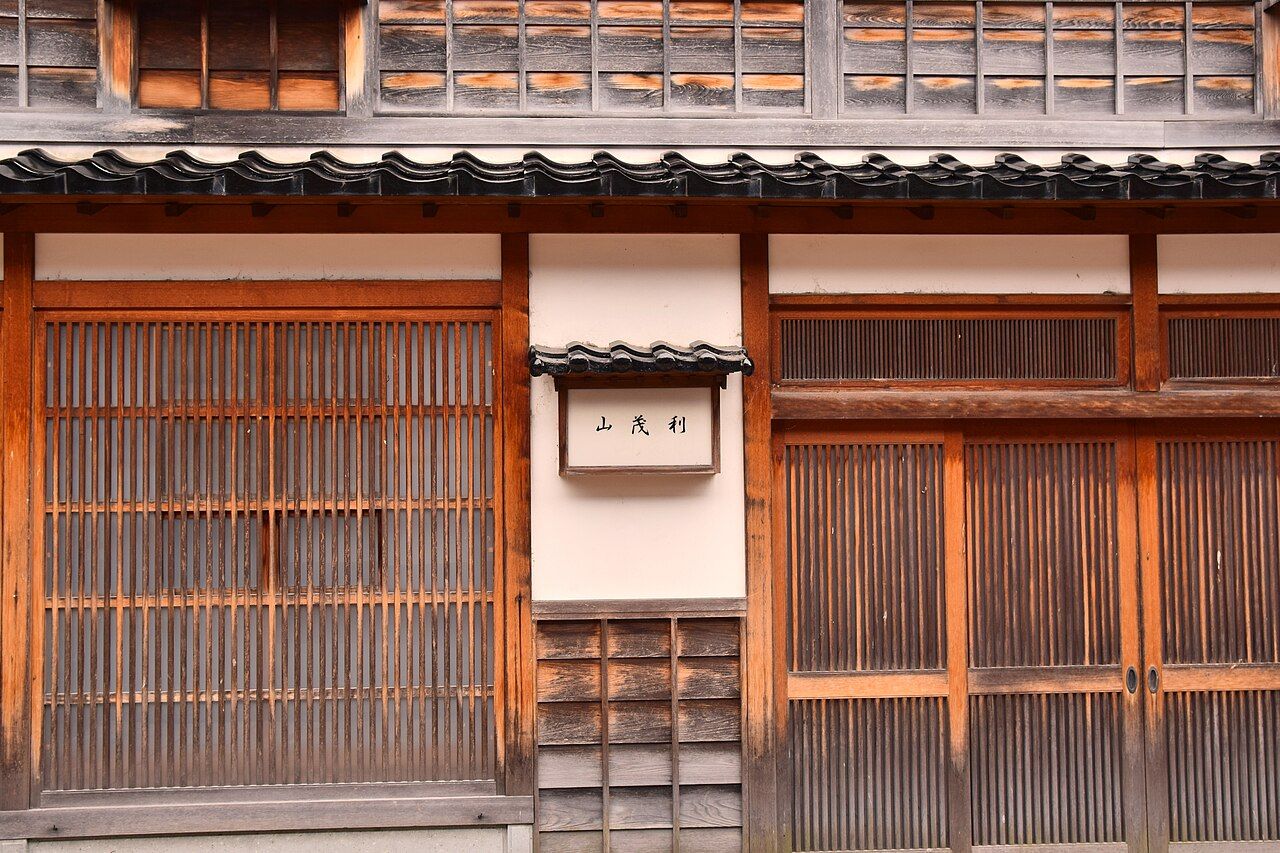
Higashi Chaya is the largest of Kanazawa's old teahouse districts, a few streets of two-storey wooden buildings with fine latticework on their ground floors. These chaya were places where geisha entertained guests, and a few still operate that way today. Others have become shops and galleries, and some are private homes.
Treat the district as a street, not a stage. Walk it early or late, when it is calm, and look at the details: the thin vertical slats of the lattice, which let people inside see out while keeping the interior private, and the small name plaques beside the doors. A smaller teahouse district, Kazuemachi, lies along the river nearby, and it is often quieter still.
Kanazawa is also known for gold leaf, produced in the city in large quantities for temples and crafts. You will see it on everything from lacquerware to desserts.
Across the Asano River, the streets climb up to Utatsuyama, a hill lined with small temples and quiet paths. It is an easy walk from Higashi Chaya and a good place to escape the crowds.
Nagamachi, the samurai district
Nagamachi, a short walk west of the city centre, was home to samurai families of the Maeda domain. Narrow lanes run between tall earthen walls topped with tiles, beside a stone-edged canal. In winter the walls are wrapped in straw mats to protect them from snow and frost, which gives the lanes a soft, golden look.
One restored samurai house is open to visitors, with a small garden and rooms laid out as they might have been. Most of the district is still residential, so keep voices low and stay off private property. From here, it is a short walk to the busy market and shopping streets of the centre, a good place for lunch.
Weather and when to go
Kanazawa is known for its rain and snow. The winters are grey, wet and often snowy, and the summers are humid. Spring and autumn are the most comfortable seasons, with cherry blossom in early April and maple colour in November. Winter has its own appeal if you dress for it, with snow on the garden's ropes and crab season on the coast.
Carry an umbrella whatever the forecast. The city keeps a sense of calm that larger cities lose, and two days is enough to see it properly. For a sense of how it compares with the capital, our guide to Tokyo by train covers the other end of the shinkansen line.
Photographs on this platform
- Main photograph: Raita Futo from Tokyo, Japan, CC BY 2.0
- Photograph: Daderot at English Wikipedia, CC BY-SA 3.0
- Photograph: Balon Greyjoy, CC0